Carpenter Ant Removal
Toronto & GTA
Toronto's damp springs and older wood-frame housing make carpenter ants one of the region's most destructive pests. Bugsway's certified technicians locate every satellite colony, eliminate the queen, and seal entry points to protect your home's structure.
What Are Carpenter Ants — and Why Are They Common in Toronto?
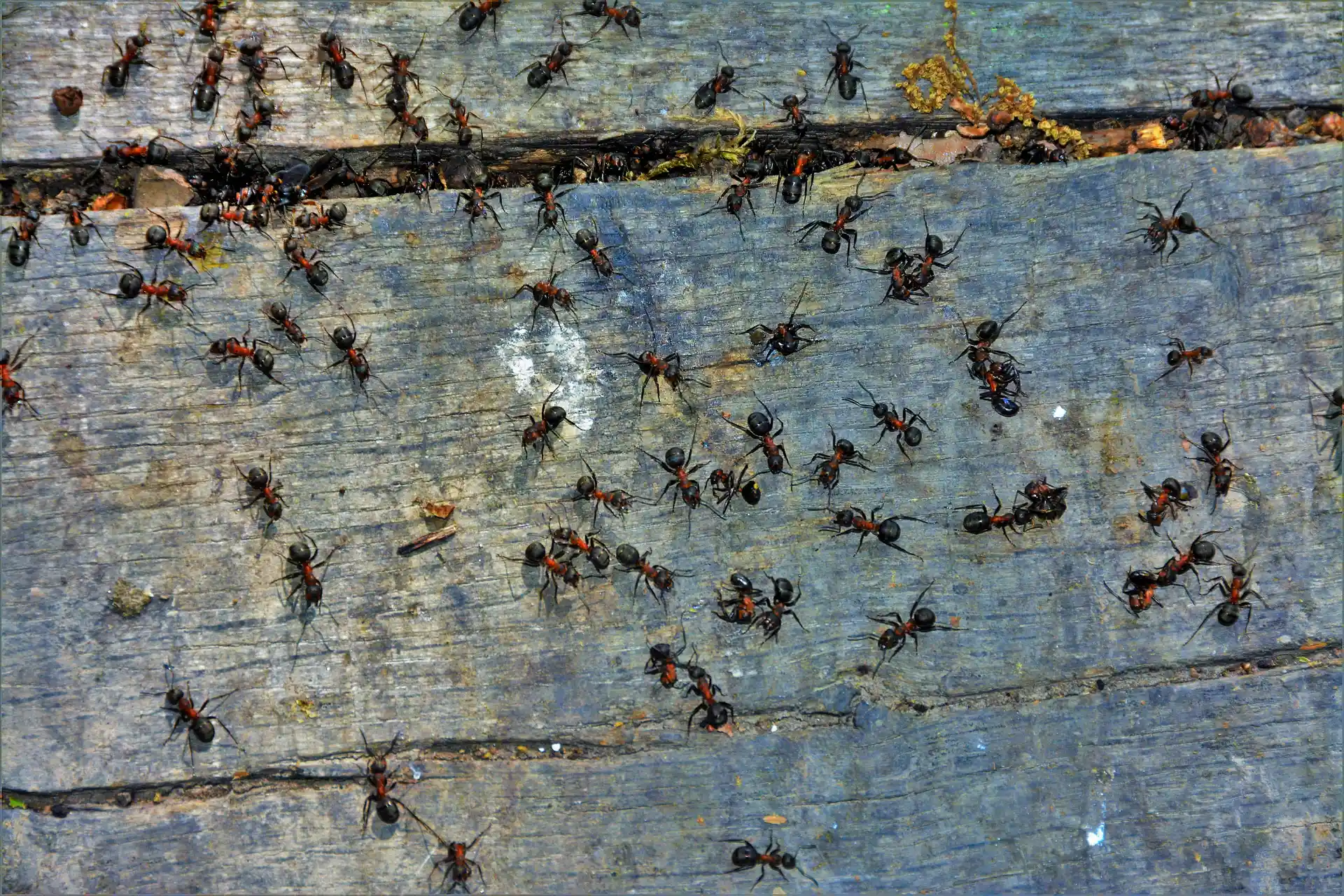
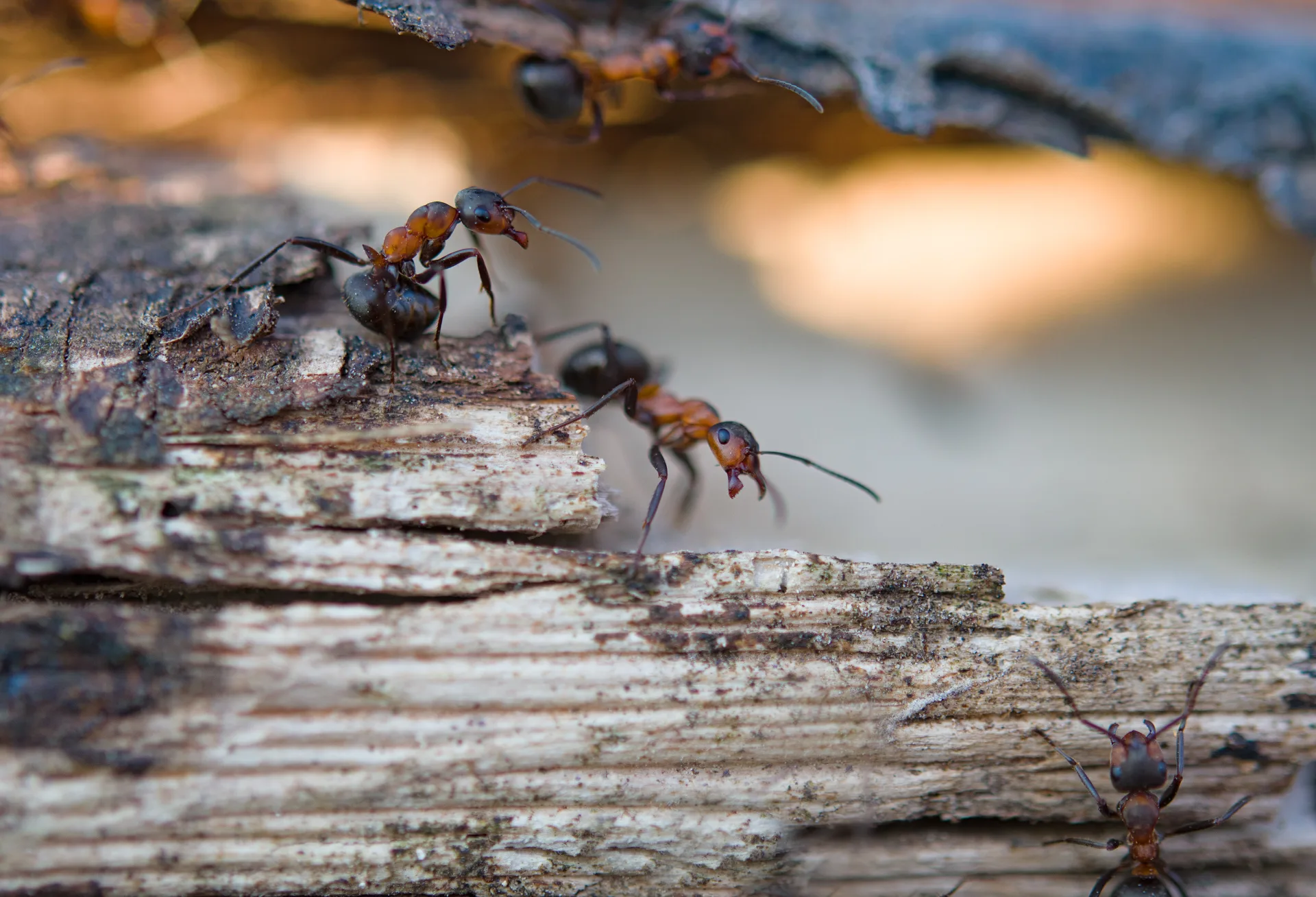
Carpenter ants (Camponotus pennsylvanicus and related species) are the largest ants found in Ontario, ranging from 6 to 12 mm in length. Unlike termites, they do not consume wood for nutrition — instead, they excavate galleries through soft, moisture-damaged timber to create nesting chambers for their colonies. The resulting structural damage is identical in severity to termite activity and can compromise load-bearing beams, window frames, door jambs, and deck supports over time.
Toronto's climate creates near-ideal conditions for carpenter ant establishment. The city receives roughly 820 mm of annual precipitation, and freeze-thaw cycles between November and April accelerate wood decay in poorly maintained exterior surfaces. Neighbourhoods like Rosedale, High Park, the Annex, and Leslieville feature abundant mature tree canopy — stumps, hollow branches, and deadwood serve as primary carpenter ant nest sites from which scouts range up to 100 metres into adjacent homes.
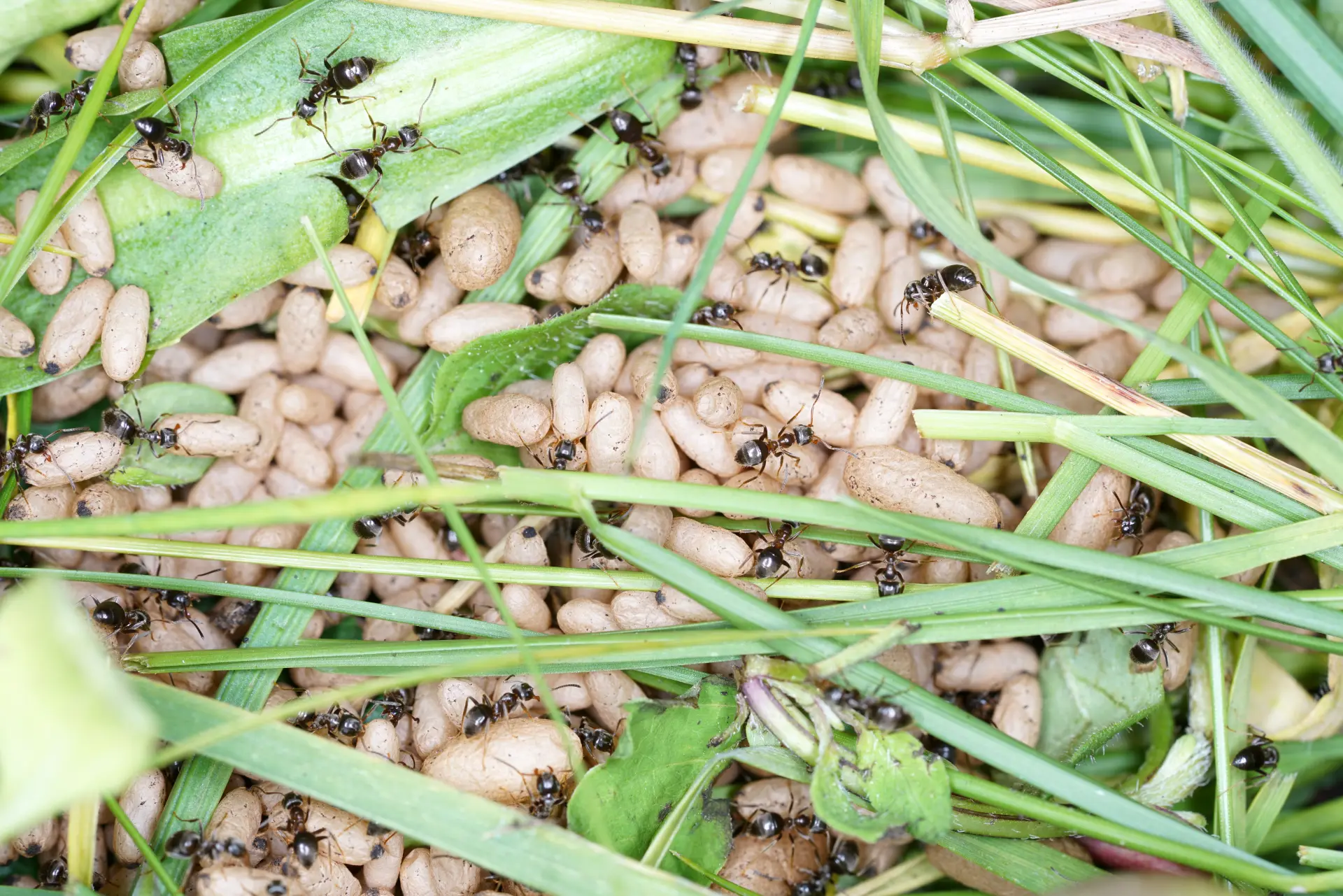
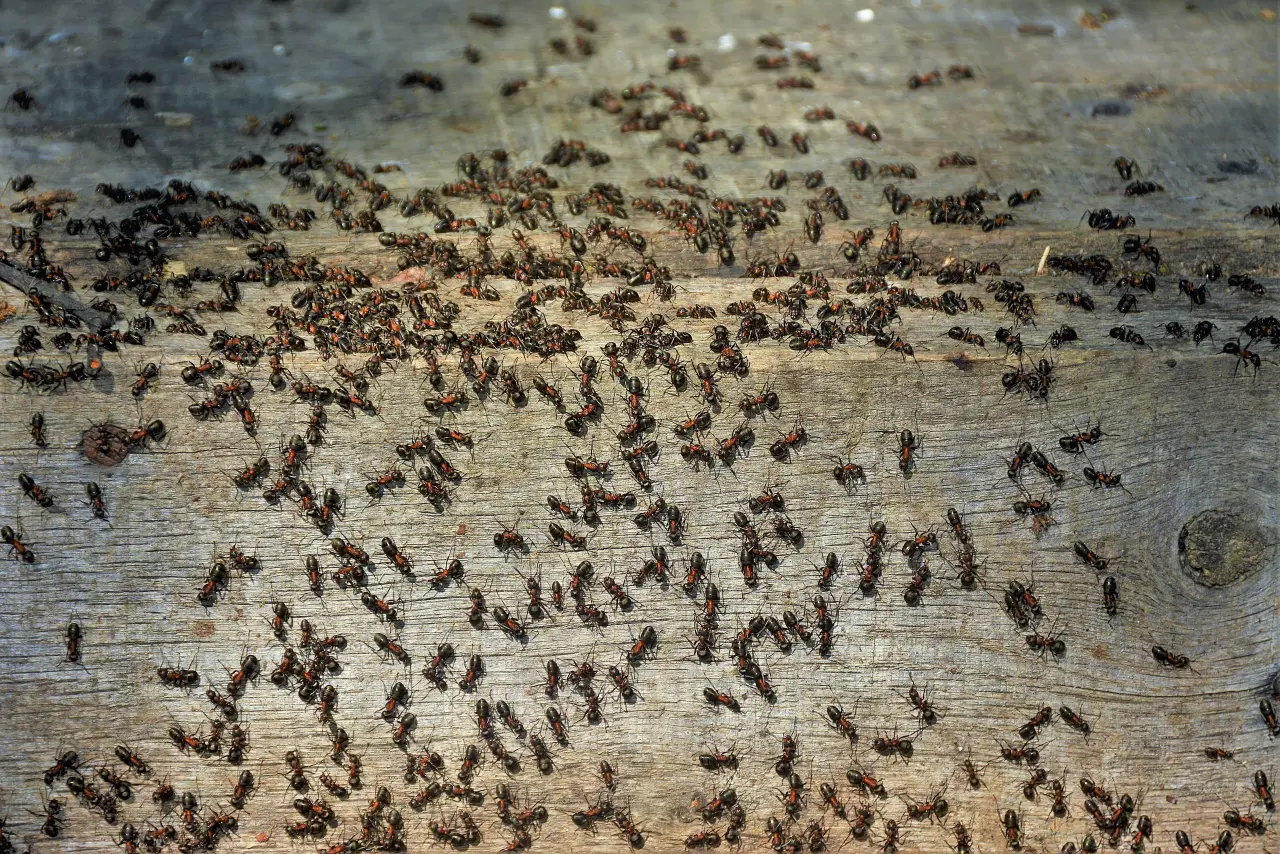
A mature carpenter ant colony contains 2,000–10,000 workers and can produce satellite nests inside the heated walls of your home. Satellite colonies do not need a queen and will persist even if the outdoor parent nest is treated. This biology is why over-the-counter sprays fail — they kill foraging workers but leave the colony intact. Professional treatment must locate and eliminate all satellite nests to achieve lasting control.
According to Health Canada's Pest Management Regulatory Agency, carpenter ant populations across Ontario have expanded northward as milder winters allow larger founding colonies to survive and produce more satellite nests. Homeowners who notice large, winged ants (swarmers) indoors in May or June should treat this as a strong signal of an established internal infestation requiring professional assessment.
Why Professional Carpenter Ant Removal Matters for Toronto Homes
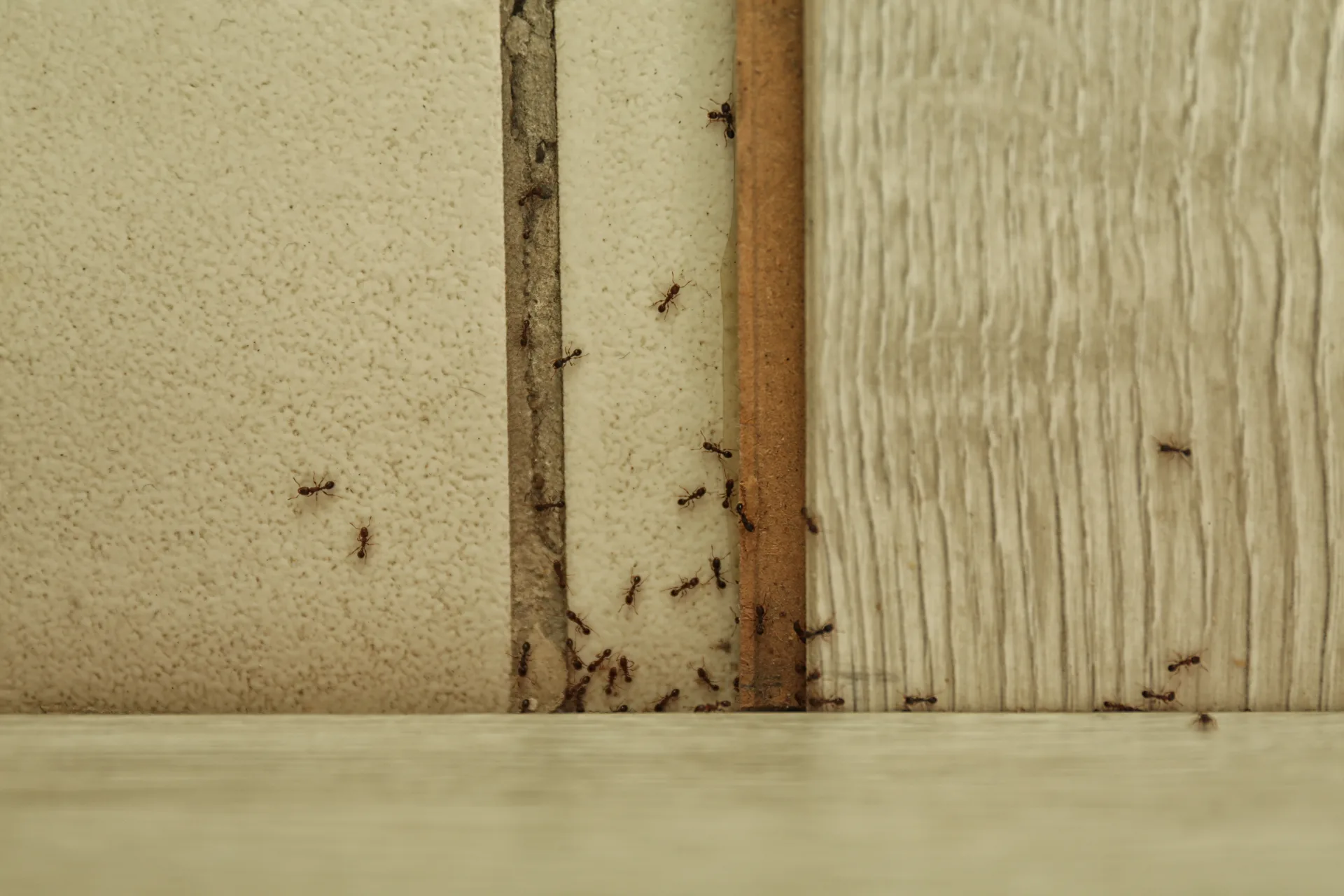
Toronto homeowners frequently attempt carpenter ant treatment with retail products from hardware stores along the Queensway or in Scarborough, only to find the ants return within weeks. The fundamental problem is that retail insecticides are repellent — ants detect them and route around treated areas, while the colony remains deep in wall voids or under the subfloor. Professional-grade non-repellent products transfer throughout the colony via trophallaxis (food sharing) and eliminate workers, queens, and brood alike.
Bugsway technicians carry thermal imaging equipment and acoustic detection tools that identify carpenter ant nesting sites behind drywall without destructive probing. Our team is trained to recognize the subtle signs unique to Toronto's housing stock: frass deposits behind crown moulding in Victorian-era homes, rustling sounds in balloon-frame walls common in pre-1940 houses near Bloor West Village, and moisture staining patterns that predict nest locations in post-war bungalows across Etobicoke and North York.
Ontario's Pesticides Act (R.S.O. 1990, c. P.11) restricts the use of several commercial-grade insecticide formulations to licensed applicators only. Bugsway technicians hold valid Ontario Ministry of the Environment pesticide licences (Extermination category) and maintain updated training under Ontario Regulation 63/09. This regulatory framework protects Toronto residents — our treatments use approved, low-risk products applied at registered rates, keeping families and pets safe while delivering results that retail products cannot match.
The cost of professional carpenter ant removal is a fraction of the structural repair costs that unchecked infestations generate. Replacing a single sistered floor joist damaged by years of carpenter ant excavation in a Toronto semi-detached can cost $1,200–$3,500 depending on access and scope. Our service stops that damage progression and provides written documentation useful for home insurance claims and real-estate disclosures.
What's Included in Our Carpenter Ant Removal Service
Full Property Inspection
We inspect all accessible interior and exterior areas including crawl spaces, attics, wall voids, and exterior wood surfaces to identify every active colony and potential entry point.
Non-Repellent Treatment
Application of Health Canada–registered non-repellent insecticides into wall voids, sub-floor spaces, and identified satellite nest locations for complete colony elimination.
Exterior Perimeter Barrier
A residual barrier product is applied around the full exterior foundation, windows, doors, and utility entry points to stop foraging ants from re-entering the structure.
Entry-Point Sealing Advice
Our technician documents all identified entry points — gaps around pipes, cable penetrations, rotted fascia — and provides a written report with recommended exclusion repairs.
Follow-Up Inspection
A complimentary follow-up visit 2–3 weeks after initial treatment confirms elimination and applies supplemental treatment to any persistent activity areas at no extra charge.
60-Day Written Guarantee
Every carpenter ant removal service is backed by our 60-day re-treatment guarantee in writing — if ants return, we come back at no additional cost.
Carpenter Ants Destroying Your Home's Structure?
Don't wait until the damage is costly. Our Toronto technicians are available same-day for urgent carpenter ant assessments.
Our Carpenter Ant Removal Process — Step by Step
Step 1 — Phone Consultation & Scheduling: When you call 416-555-5555 or submit a contact form, our customer service team gathers details about your home, the signs you've observed (frass, swarmers, rustling sounds), and your schedule availability. We offer morning, afternoon, and evening appointment windows across all Toronto neighbourhoods and throughout the GTA including Mississauga, Brampton, Markham, Vaughan, and Pickering.
Step 2 — On-Site Inspection: A licensed Bugsway technician arrives in a marked service vehicle and conducts a systematic inspection of your property. Using moisture meters, thermal cameras, and acoustic devices, we map the location of all active carpenter ant activity. We check attic spaces, basement joists, exterior fence posts, deck ledger boards, and any wood features touching soil. This 30–45 minute inspection phase is critical — it determines exactly where treatment products need to be applied.
Step 3 — Treatment Application: Based on inspection findings, your technician selects the appropriate combination of non-repellent liquid insecticide (injected into wall voids via precision drill ports), residual dust (applied to attic and sub-floor spaces), and exterior perimeter spray. Bait stations may be placed near exterior nest sites to intercept foraging trails. All drill ports are caulked and finished to match existing surfaces where possible.
Step 4 — Documentation & Client Briefing: You receive a written service report detailing all treatment zones, products used (with PMRA registration numbers), entry points identified, and structural repair recommendations. Our technician walks you through post-treatment expectations — it is normal to see increased ant activity for 5–10 days as workers encounter treated areas and carry insecticide back to the colony.
Step 5 — Follow-Up & Confirmation: We contact you 2 weeks after treatment to assess results. If follow-up is required, we schedule a complimentary return visit. For clients on our annual maintenance programme, we perform a seasonal perimeter re-application each April before the start of ant foraging season, ensuring year-round protection.
Carpenter Ant Removal Pricing in Toronto
Transparent pricing with no hidden fees. Final cost depends on property size, colony extent, and number of treatment zones. All prices include HST.
Single treatment, condo/townhouse or small detached
- Full interior + exterior inspection
- Non-repellent void treatment
- Exterior perimeter barrier
- Written service report
Larger homes, multiple colonies, full guarantee
- Everything in Standard
- Thermal camera inspection
- Multi-satellite colony treatment
- Follow-up visit included
- 60-day written guarantee
Why Toronto Homeowners Choose Bugsway for Carpenter Ant Removal
Bugsway Pest Control has served Toronto and the GTA since 2009, building a reputation based on technical expertise, transparent communication, and guaranteed results. Founded by Michael Thompson, a licensed pest control operator with over two decades of field experience, Bugsway operates with the principle that every client deserves the same thoroughness applied to our own homes.
Our technicians are not commission-based — they are salaried professionals who have no financial incentive to recommend unnecessary treatments. When our technician inspects your property and finds a minor, newly established trail that can be resolved with targeted exterior treatment, that's what you'll receive and be charged for. This honest approach has earned Bugsway a 4.9-star average across 312 verified reviews on Google.
We serve all Toronto neighbourhoods including Scarborough, North York, Etobicoke, East York, and downtown Toronto, as well as the broader GTA municipalities of Mississauga, Brampton, Oakville, Burlington, Markham, Richmond Hill, Vaughan, Aurora, Newmarket, Ajax, Whitby, and Pickering. Our service fleet operates seven days a week, including statutory holidays, ensuring you can always reach us when you need help most.
All Bugsway carpenter ant treatments comply with Ontario's Pesticides Act and are carried out in accordance with the Integrated Pest Management (IPM) framework promoted by the Ontario Ministry of the Environment, Conservation and Parks. We document every treatment with product registration numbers and application rates, giving you a complete compliance record — valuable for strata, property management, and real-estate transactions. Learn more about our full ant control programme or explore fire ant treatment and pavement ant control as related services.
Ready to Protect Your Home from Carpenter Ant Damage?
Join over 3,000 Toronto homeowners who trust Bugsway for fast, effective, guaranteed pest control.
Related Ant Control Services
Fire Ant Treatment
Targeted elimination of fire ant colonies using granular bait and contact insecticide for Toronto yards and green spaces.
Learn MorePavement Ant Control
Eliminate pavement ant infestations from driveways, patios, and interior spaces with residual perimeter treatments.
Learn MoreAll Ant Control Services
Browse Bugsway's complete range of ant identification, treatment, and prevention services for Toronto homes and businesses.
View AllCarpenter Ant Removal — Frequently Asked Questions
How do I know if I have carpenter ants vs termites?
Carpenter ants are large (6–12 mm), black or red-and-black, and have a pinched waist and elbowed antennae. Unlike termites, they do not eat wood — they excavate galleries to nest. Look for coarse sawdust (frass) near baseboards or window sills as a key sign of carpenter ants. Termite frass, by contrast, is finer and more pellet-like. If in doubt, a Bugsway inspection will confirm identification within minutes.
Are carpenter ants dangerous to my Toronto home?
Yes. Carpenter ants tunnel through wood to create nesting galleries, weakening structural timbers over time. Toronto homes with older wood framing, moisture damage, or attached decks are especially vulnerable. Left untreated, large satellite colonies can cause significant structural damage within 2–3 years, leading to costly repairs to floor joists, window framing, and wall plates.
When is carpenter ant season in Toronto?
Carpenter ant activity peaks in Toronto between April and September, with swarmers (winged reproductives) typically appearing in May and June. However, indoor colonies remain active year-round, especially in heated spaces near moisture sources like kitchens and bathrooms. Seeing swarmers inside your home in winter is a particularly alarming sign of a well-established internal colony.
How many treatments are needed to eliminate carpenter ants?
Most carpenter ant infestations require 1–3 treatments depending on colony size and whether satellite colonies exist. Our comprehensive service includes a follow-up inspection 2–3 weeks after initial treatment to confirm elimination and apply residual barrier product if needed. Annual maintenance programs are recommended for high-risk properties near wooded ravines or mature tree cover.
Can I treat carpenter ants myself?
DIY baits and sprays often fail because they target foraging workers rather than the queen and satellite colonies. Professional treatment locates hidden nesting sites through wall-void inspection and applies non-repellent insecticides that workers carry back to eliminate the entire colony. Retail repellent sprays can actually make infestations worse by splitting colonies into multiple satellite nests.
How long does a carpenter ant treatment take?
A standard treatment visit takes 60–90 minutes for an average Toronto semi-detached or detached home. Larger properties with multiple satellite colonies may require 2–3 hours. We treat all accessible void spaces, exterior perimeter, and identified entry points. You can remain home during treatment, though we ask that you keep pets and children out of treated areas for 2–4 hours.
Is the treatment safe for my family and pets?
All products Bugsway uses are licensed under Health Canada Pest Management Regulatory Agency (PMRA) guidelines. We use low-toxicity, targeted formulations. Families and pets should stay out of treated areas for 2–4 hours after application, after which residues are dry and safe. We always provide a product information sheet listing active ingredients so you have complete transparency.
What warranty do you offer on carpenter ant removal?
Our comprehensive carpenter ant service includes a 60-day re-treatment guarantee. If active carpenter ant activity returns within 60 days of treatment, we return at no additional charge. Annual maintenance programs extend this warranty and include seasonal perimeter barrier applications in April and August, keeping your home protected through peak carpenter ant season.
Get Expert Carpenter Ant Removal Today
Serving Toronto, Scarborough, North York, Etobicoke, Mississauga, Brampton, Markham, and all GTA communities. Same-day appointments available.
How Carpenter Ant Colonies Develop in Toronto Homes
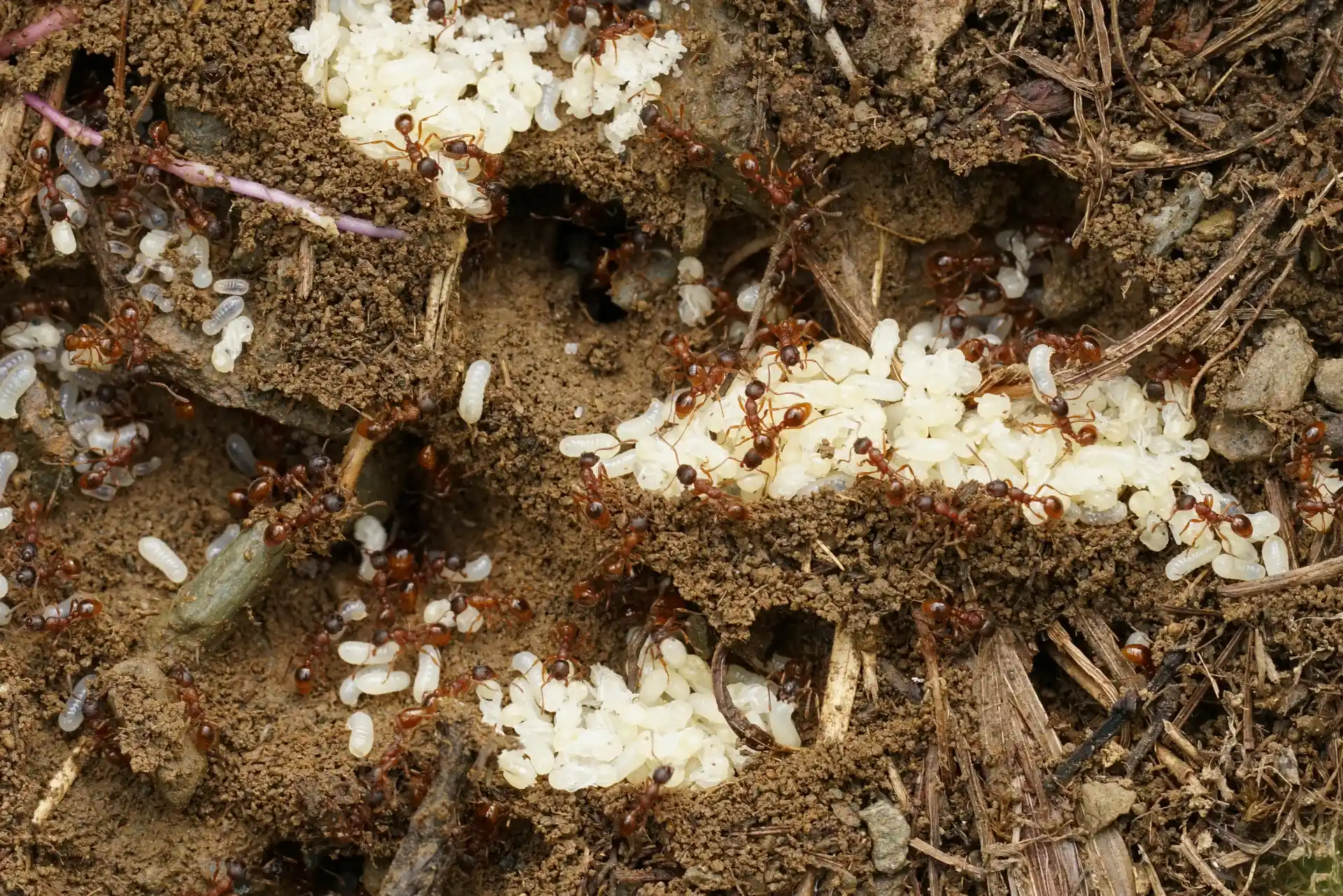
Carpenter ant colonies develop slowly compared to other household pests — a colony takes 3-6 years to reach maturity and produce reproductive swarmers. Founding queens establish satellite colonies indoors (in moisture-damaged wood) while the parent colony remains outdoors in a tree stump, decaying log, or landscaping timber. Worker ants travel between the parent colony and satellite colonies, which is why ant trails are often seen crossing exterior walls and window frames rather than originating solely from inside the building. A single parent colony may have multiple indoor satellite colonies distributed across several floors and rooms.
Understanding this biology is critical for effective treatment. Targeting only the indoor satellite colonies leaves the parent colony and its foragers intact — the infestation continues. Complete elimination requires treating both the satellite colonies directly (dust injection into wall voids) and the foraging trails linking them to the parent colony. In many Toronto properties, the parent colony is in a tree stump or mature tree within 30-50 metres of the home — Bugsway locates and treats the outdoor colony as part of a complete carpenter ant service.
Structural Damage Assessment: What Carpenter Ants Destroy
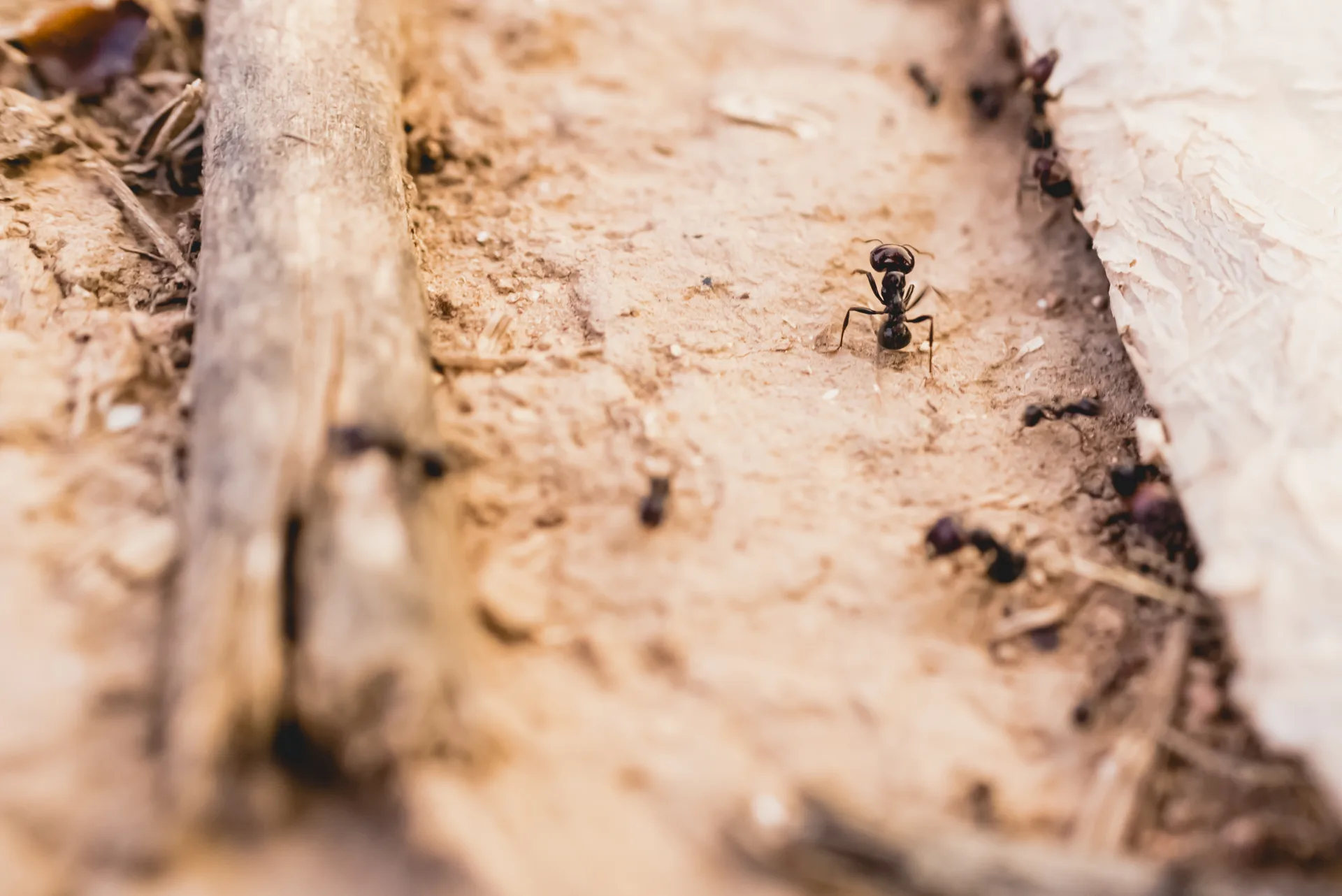
Carpenter ant damage is most often discovered during renovation work — when walls are opened and excavated galleries are found in floor joists, sill plates, and framing members. Unlike termite damage (which degrades wood from the inside leaving a thin surface intact), carpenter ant galleries have clean, smooth walls and often contain sawdust frass ejected from the tunnels. The damage accumulates over years: a mature colony active for 10+ years can hollow out a 4x8 floor joist or wall stud sufficiently to compromise its load-bearing function, though this level of damage is less common than the anxiety it generates.
The most common carpenter ant damage locations in Toronto homes are: window frames and sills (where moisture from condensation and rain infiltration softens wood); deck ledger boards and beam ends (exposed to outdoor moisture); fascia boards and soffit framing near roof edge water intrusion; and basement sill plates at grade level. Bugsway documents damage found during treatment with photographs and written descriptions. We provide recommendations for contractor repair but do not perform structural repairs ourselves.
Preventing Carpenter Ant Re-Infestation After Treatment
Carpenter ant re-infestation is common when the conditions that attracted the original colony remain unaddressed. The primary drivers are moisture and wood-to-soil contact. After successful treatment, Bugsway recommends: repairing all leaks (roof, window flashing, plumbing) that create the moisture conditions carpenter ants require; replacing moisture-damaged wood identified during the inspection; removing wood-to-soil contact at deck posts, fence posts, and landscaping timber against the foundation; and eliminating potential parent colony sites (decaying tree stumps within 50 metres of the building).
Maintaining a clear zone around the building perimeter — removing wood mulch from foundation beds (replace with stone or rubber mulch), keeping firewood stacked away from the house, and trimming tree branches that overhang or touch the roof — eliminates the most common carpenter ant highways into the building. Annual spring perimeter spray treatment, applied in April before carpenter ant swarmer season, kills foragers before they locate entry points and re-establishes a chemical barrier around the structure.
Frequently Asked Questions
Questions? Call 416-555-5555
How do I know if I have carpenter ants or termites?
Are carpenter ants dangerous to humans?
How long does carpenter ant treatment take to work?
Do carpenter ants eat wood?
What time of year do carpenter ants swarm?
How large can a carpenter ant colony get?
Can I treat carpenter ants myself?
Does homeowner's insurance cover carpenter ant damage?
Carpenter Ant Removal in the GTA: What to Expect After Treatment
After Bugsway's carpenter ant treatment, expect to see ant activity for up to 14 days as foragers come into contact with residual bait and return to the colony. This is normal and is part of the elimination process — carpenter ants carry bait back to the satellite colony and the parent colony, causing cascading mortality through the colony structure. Do not clean treated areas or spray over bait placements during this period. Bugsway's 30-day guarantee means if visible carpenter ant activity continues after 14 days, we return for a complimentary follow-up treatment.
Preventing carpenter ant return requires addressing the moisture conditions that made your structure attractive in the first place. Bugsway's post-treatment prevention guide covers: repairing leaking roof valleys and eavestrough connections, fixing plumbing drips in bathroom and kitchen walls, replacing deteriorated deck boards and fence posts in contact with soil, and trimming tree branches that touch the roofline — the primary overground pathway for carpenter ants moving from outdoor colonies to indoor satellite colonies. Properties that address structural moisture sources after treatment have significantly lower rates of carpenter ant recurrence.
Carpenter ant removal is available throughout the Greater Toronto Area including Toronto, Mississauga, Brampton, Burlington, Vaughan, Markham, Richmond Hill, and Oakville. Same-day and next-day appointments are available across the GTA. Annual carpenter ant prevention programs for high-risk properties — homes near mature tree canopy, cedar hedging, and wooded ravines — start at $200 per year and include a spring inspection and perimeter treatment before the peak May-June swarmer season.