Wasp & Bee Removal Toronto —
Safe, Expert Service
A wasp nest in or around your Toronto home demands immediate professional attention. Bugsway's licensed stinging insect specialists safely remove wasp nests, eliminate hornet colonies, and relocate honey bee hives — with full protective equipment, approved insecticides, and emergency same-day response across the GTA.
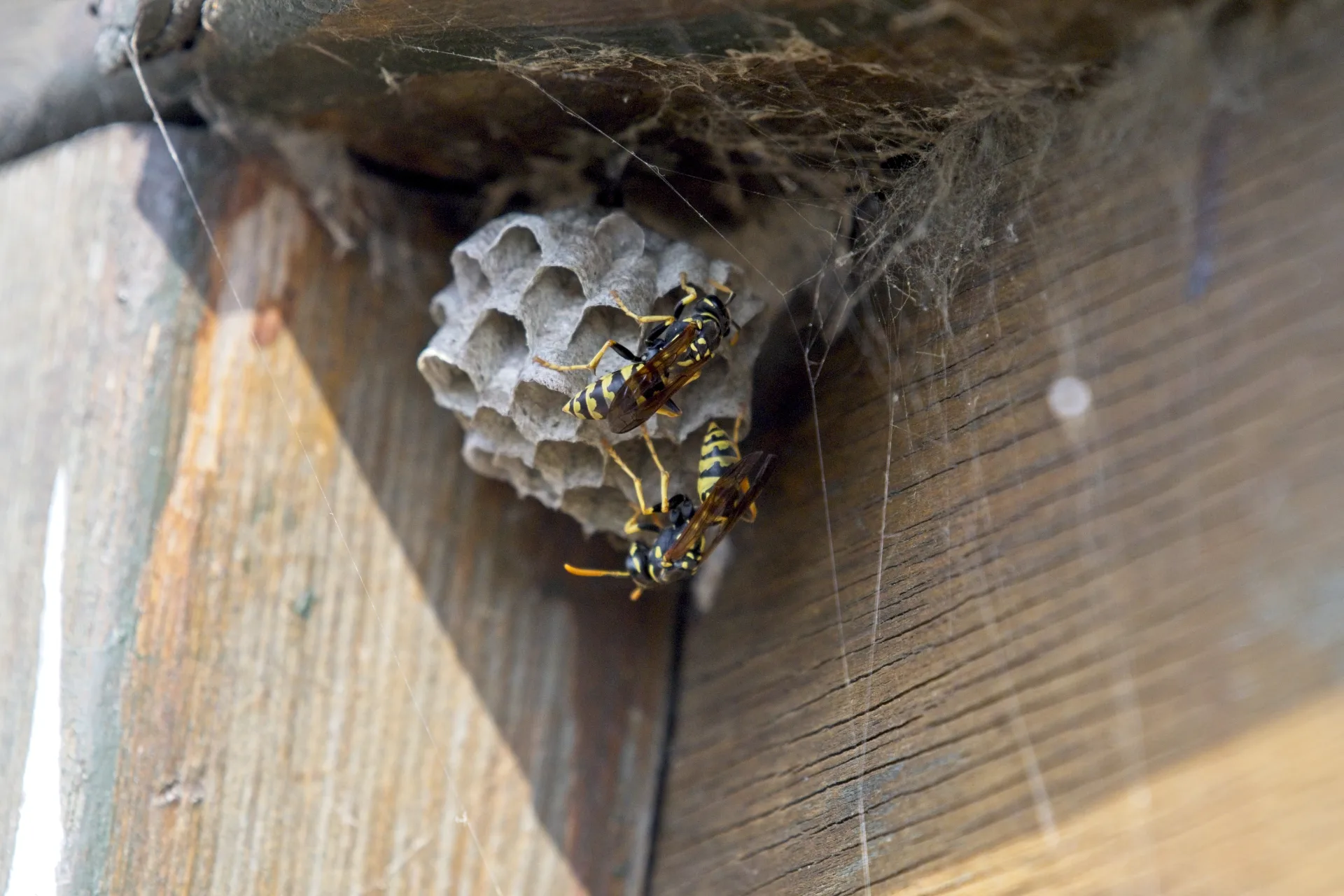
Wasp Nests in Toronto: The Hidden Danger in Your Eaves and Yard
Toronto's warm summers create ideal conditions for social stinging insects. Yellow jacket colonies build through spring and reach their largest and most aggressive populations in late summer (August–September), when a single nest may house 3,000–5,000 workers. Bald-faced hornet nests in trees and on structures add to the challenge, with aggressive defence radiuses extending several metres from the nest entrance.
The real danger is the unpredictability of stinging incidents. Yellow jackets will sting without provocation when their nest is disturbed, and unlike honey bees, they can sting repeatedly without dying. For individuals with sting allergies — approximately 3% of the population — a mass stinging event can cause life-threatening anaphylactic shock. Even without a known allergy, multiple simultaneous stings cause systemic effects requiring immediate medical attention. Health Canada advises maintaining a minimum 5-metre distance from any active nest.
DIY wasp removal attempts using retail aerosols are dangerous and frequently ineffective — they may kill surface workers while leaving the queen and pupae alive to rebuild, and they provoke immediate defensive swarming. Professional treatment using professional-grade insecticidal dust at dusk or dawn, when colonies are clustered inside, is the only reliably safe and effective approach. Our technicians hold valid Ontario MECP licences and carry full liability insurance on every job.
On This Page
Wasp & Bee Removal Services in Toronto
Wasp Nest Removal
Complete removal of yellow jacket and paper wasp nests from eaves, soffits, walls, attics, and underground sites. Professional insecticidal dust treatment followed by physical nest removal and void sealing to prevent colony rebuild.
Full DetailsBee Relocation
Honey bee hive relocation in partnership with licensed Ontario beekeepers. Where structurally feasible, we preserve the colony by relocating it to a local apiary rather than exterminating. Environmentally responsible honey bee management.
Full DetailsHornet Control
Safe elimination of bald-faced hornet colonies from large aerial nests in trees and on structures. Our technicians use extended-reach equipment and full protective gear to treat and remove nests safely regardless of height or location.
Full DetailsWasp Nest on Your Toronto Property? Call Immediately.
Wasp nests grow larger and more dangerous every day. Same-day emergency response available across the GTA. Fully licensed and insured.
Wasp & Bee Removal Pricing — Toronto
Pricing varies by nest size, location, and accessibility. All quotes include HST. Free estimates provided before service begins.
Basic
Small accessible nest
- Eave or soffit nest
- Treatment & removal
- 30-day guarantee
Standard
Medium nest, wall void, or aerial
- Any accessible location
- Treatment, removal & sealing
- Residual void treatment
- 30-day guarantee
Premium
Large nest, underground, or attic
- Complex access locations
- Full treatment & nest removal
- Written service report
- 30-day guarantee
Bee relocation pricing quoted separately: $200–$500 depending on hive size and accessibility.
How Bugsway Safely Removes Wasp Nests in Toronto
Safe wasp nest removal is a combination of timing, technique, and protective equipment. Bugsway technicians treat wasp nests at dusk or dawn — the period when colony temperatures are lowest and the majority of workers are clustered inside the nest. This timing maximizes the number of wasps contacted by insecticidal dust and minimizes defensive swarming during the treatment window.
For accessible nests in eaves, soffits, and structures, we apply professional-grade insecticidal dust directly into the nest entrance. Dust formulations adhere to wasps and are carried deeper into the nest as workers move through the colony — providing superior penetration compared to aerosol sprays. After confirming colony death (typically within 24–48 hours), the nest is physically removed and the void is treated with residual to deter future construction.
For honey bee hives where relocation is feasible, we coordinate with local Ontario beekeepers who extract and transport the colony to apiaries. This preserves the hive and reflects our commitment to ecological responsibility. Honey bee relocation requires more time and resources than wasp elimination and is priced accordingly. Read more about our environmental commitments on our about page.
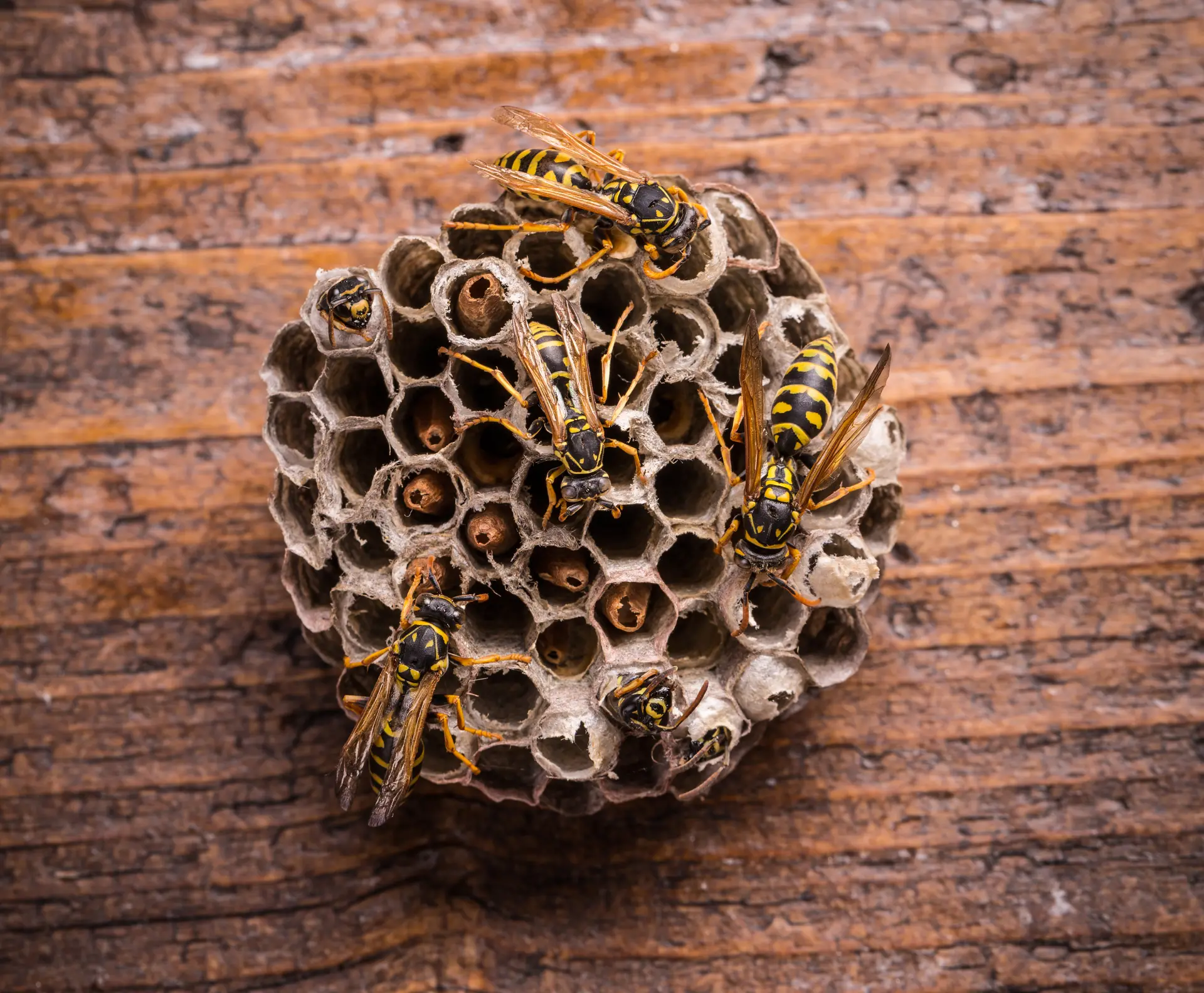
Don't Risk a Dangerous Sting — Act Now
Licensed wasp and bee specialists. Same-day emergency service. Fully insured. 30-day guarantee on all nest removals.
What Toronto Residents Say
"Yellow jacket nest in our garden shed wall. My kids had already been stung twice. Bugsway arrived within 3 hours, fully suited up, and had the nest completely eliminated that evening. My kids could use the backyard again the next morning. Incredible response time."
— Karen M., North York
"Large bald-faced hornet nest in our backyard oak tree. I was terrified to get close. Bugsway's technician handled it completely, wearing full protective equipment, and removed every trace of the nest. Professional and explained everything clearly beforehand."
— Paul N., Rosedale
"We had a honey bee swarm establish in our garage wall. I really didn't want them killed. Bugsway arranged a beekeeper the same week and the whole colony was safely relocated. Amazing that they prioritize bee conservation. I'll recommend them to everyone."
— Lisa T., The Beaches
Wasp & Bee Removal Service FAQs
What is the safest time to treat a wasp nest?
Wasp nests are safest treated at dusk or dawn when the majority of the colony is inside and movement is minimal. Cooler temperatures slow wasp reactions, reducing defensive swarming risk during treatment. Bugsway always schedules treatments during these windows for maximum safety and efficacy.
Do wasps return to a removed nest location?
Surviving foragers return to the nest site for 24–48 hours and then permanently disperse once they find the nest gone. We apply residual insecticide to the void and recommend sealing the entrance to prevent a new colony from using the same site the following spring.
Can wasp nests be removed safely in winter?
Yes. Toronto wasp colonies die off in late October–November as temperatures drop. Empty winter nests can be removed manually without any chemical treatment. Queen wasps overwinter elsewhere and start new nests in spring — preventive treatment in May disrupts this cycle.
How do I identify the type of stinging insect on my property?
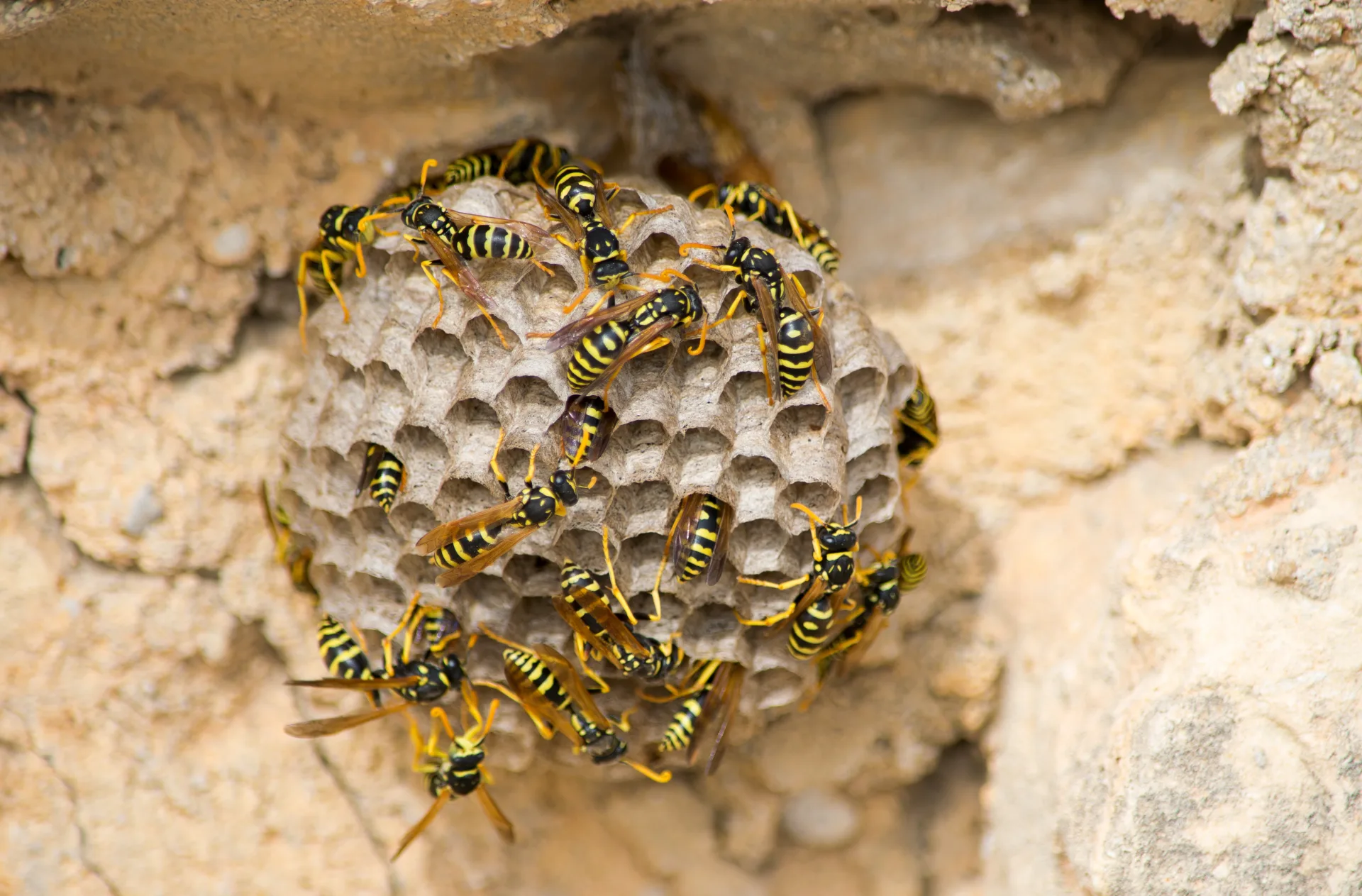
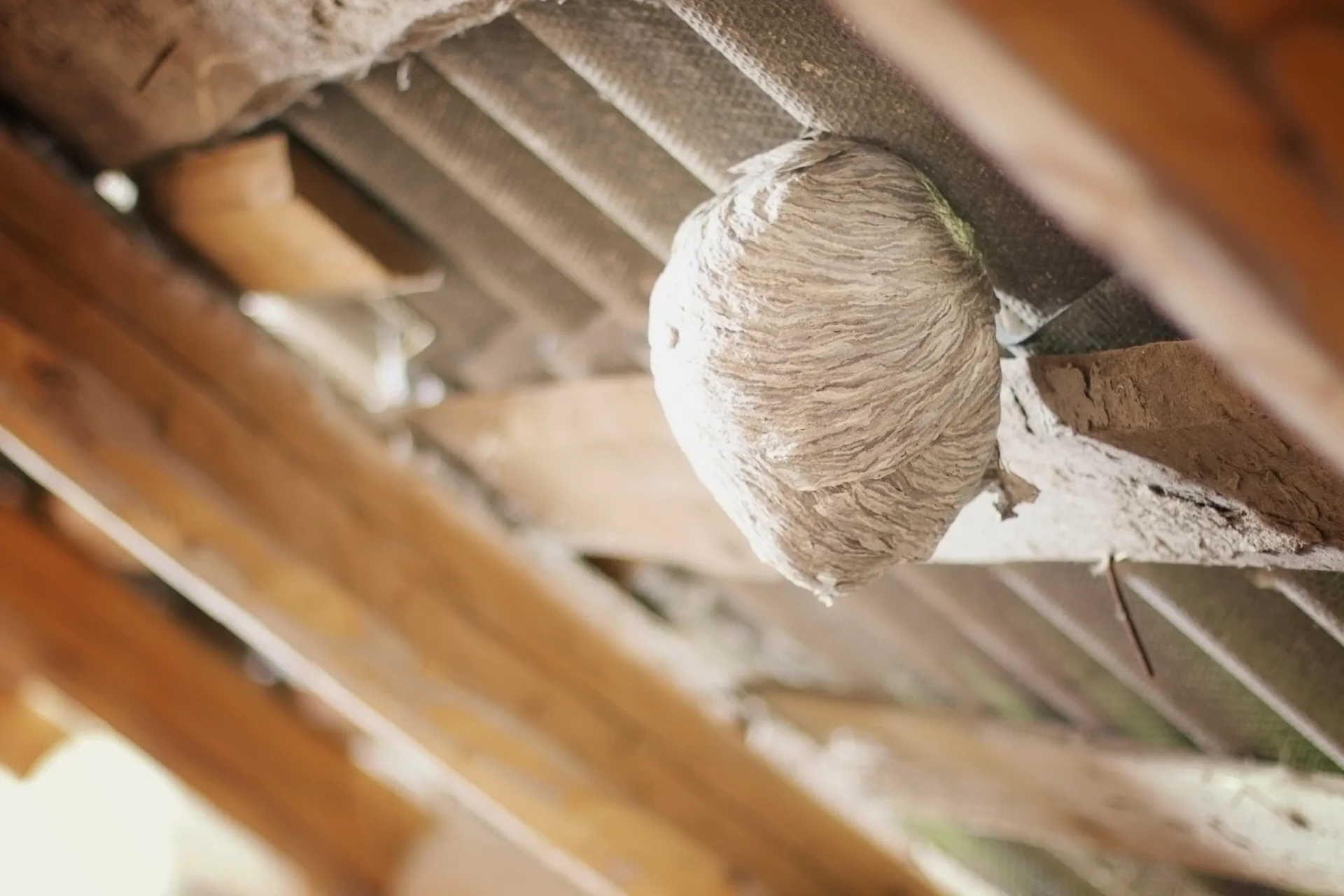
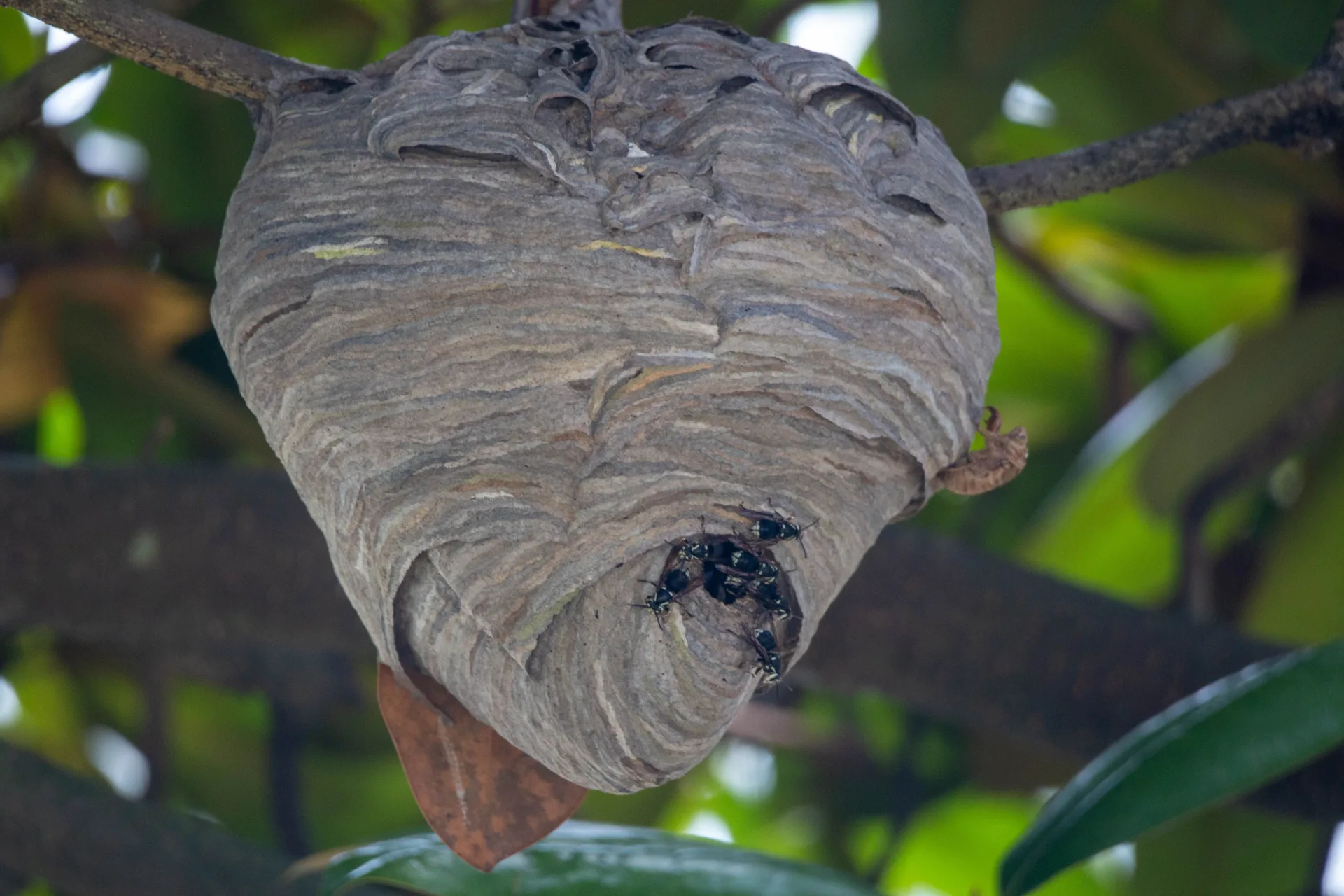
Yellow jackets build grey papery nests in voids or underground. Paper wasps construct open-cell nests under eaves. Bald-faced hornets build large football-shaped aerial nests. Honey bees form wax combs in cavities. Send Bugsway a photo — our technicians can identify the species within minutes and quote accordingly.
Is bee relocation included in wasp service pricing?
Bee relocation requires coordination with a licensed beekeeper and specialized equipment, so it is priced separately from wasp nest removal. Honey bee relocation typically costs $200–$500 depending on hive accessibility. We provide clear separate quotes for each service type.
What happens after the nest is treated?
Colony activity ceases within 24–48 hours of treatment. Surviving outside foragers return, contact the residual, and also die. Dead wasps visible near the nest site for 1–2 days is normal and confirms successful treatment. The nest is then physically removed and the void is sealed.
Can wasp stings cause anaphylaxis in someone without known allergy?
Yes. Anaphylaxis can develop even without a prior allergy as sensitivity builds with each sting exposure. A severe reaction can occur without warning on a subsequent sting. This unpredictability is a primary reason professional nest removal is always safer than DIY attempts with retail aerosols.
How do I prevent wasps from nesting on my Toronto property?
Seal gaps in soffits, eaves, and siding before spring. Remove outdoor food sources — open garbage, pet food, and fallen fruit. Install wasp deterrent traps around the yard perimeter in early May. Bugsway offers annual preventive perimeter spray programs that discourage queen wasps from selecting your property for nest establishment.
Wasp Nest Removal Safety: Why Protective Equipment Matters
Professional wasp nest removal requires full protective equipment — bee suit, gloves, veil, and appropriate insecticide — because a disturbed colony can mobilize thousands of workers simultaneously. A mature yellow jacket nest in August contains 5,000-10,000 workers capable of stinging repeatedly. A single large paper wasp colony under an eave can produce 200-300 aggressive defenders within seconds of disturbance. Consumer wasp spray products require close proximity to the nest and provide incomplete knockdown — the can runs out before the colony is neutralized, leaving the operator fully exposed to the defensive response.
Anaphylaxis — a life-threatening allergic reaction — can occur even in individuals with no prior sting allergy history. Prior stings sensitize the immune system, and the risk of a severe reaction increases with subsequent stings. Bugsway technicians carry EpiPens and are trained in first aid response as a standard safety protocol. For properties where wasp nests pose a regular seasonal problem — particularly properties with exposed wood structures, ground-level gaps, or roof soffits — an annual spring inspection prevents colonies from establishing in high-risk locations.
Bee-Friendly Removal: Working With Local Beekeepers
Ontario's honey bee population has declined significantly due to pesticide exposure, habitat loss, and varroa mite infestations. Where honey bee removal and relocation is feasible, Bugsway works with licensed local beekeepers to transfer swarms and accessible colonies to managed hive environments rather than exterminating them. Honey bee swarms — loose clusters of bees resting temporarily while scouting a new hive location — are non-aggressive and can often be collected by a beekeeper without any chemical treatment. Swarms typically move on within 24-72 hours if left alone, though calling a beekeeper to collect them ensures the bees are preserved and the cluster is controlled.
Established honey bee colonies inside wall voids present a more complex situation. Live relocation requires cutting open the wall, removing the comb intact with the queen, and transferring the colony to a hive box — a process that can take 3-6 hours and requires both a pest control technician and a beekeeper. If live relocation is not feasible, Bugsway treats the colony and removes the comb immediately after to prevent structural damage from melting wax and fermenting honey, which attracts new colonies and other pests. We assess each situation individually and recommend the most bee-friendly approach possible.
Frequently Asked Questions
Questions? Call 416-555-5555