Same-Day Emergency Service Available — GTA's #1 Rated Pest Control | 📞 416-555-5555

High-Risk Pest — Professional Removal Required

Hornet Control
Toronto & GTA

Safe, expert removal of bald-faced hornet and European hornet nests from homes, businesses, and outdoor spaces throughout Toronto. Licensed technicians. Same-day service available.
Licensed & Insured
Same-Day Available
30-Day Guarantee
Serving Toronto Since 2009
Understanding the Most Aggressive Stinging Insects in the GTA

Hornets in Toronto: Bald-Faced & European Species
Toronto's urban tree canopy and residential neighbourhoods provide ideal conditions for two hornet species: the bald-faced hornet (Dolichovespula maculata) and the European hornet (Vespa crabro). Both species can pose serious safety risks, particularly for households with children, pets, or individuals with venom sensitivities. The bald-faced hornet is unmistakable — a large, predominantly black insect with white facial markings and white patterning on the abdomen. Despite its name, it is technically a yellowjacket wasp rather than a true hornet, but its aggressive defensive behaviour and large nest size make it among the most formidable stinging insects Toronto homeowners encounter. Nests are constructed from chewed wood fibre mixed with saliva, forming the grey, papery, multi-layered structures you may spot suspended in trees, under eaves, or attached to exterior walls. By late August, a colony can house 400 to 700 workers. The European hornet (Vespa crabro) is the only true hornet established in Ontario. Introduced from Europe, it is noticeably larger than most other stinging wasps — workers reach 25–35 mm in length, with a distinctive brown and yellow banding pattern. European hornets prefer to nest in hollow trees, attic voids, wall cavities, and old sheds, making infestations particularly difficult to detect until a colony is well-established. Unlike bald-faced hornets, European hornets are active at night, often drawn to exterior lights during warm evenings, which causes considerable alarm to Toronto homeowners who encounter them unexpectedly. Both species are predatory, feeding on other insects and bringing protein back to the nest for larval development. This makes them modestly beneficial from an ecological standpoint — but a colony located near a doorway, playground, or outdoor dining area is an unacceptable safety risk. Bugsway has been removing hornet nests across Toronto neighbourhoods including Forest Hill, Rosedale, Lawrence Park, the Bridle Path, and Scarborough since 2009. Our licensed technicians have the protective equipment, product access, and expertise to handle even the largest nests safely.
Professional hornet control service Toronto GTA
The Risks of DIY Hornet Nest Removal Are Severe

Why Hornet Removal Requires Professional Expertise
Of all the stinging insect calls Bugsway receives, hornet situations generate the most urgent requests — and for good reason. Attempting to remove a hornet nest without proper training and equipment is genuinely dangerous, not merely uncomfortable. A mature bald-faced hornet colony can eject 700 stinging insects in seconds when the nest is disturbed. Unlike honey bees, which can only sting once before dying, hornets can sting repeatedly. The venom causes intense burning pain, and in individuals with no prior sensitization, a large number of stings can cause systemic toxicity even without an allergic reaction. For people with venom allergies (an estimated 3% of the Canadian population, according to Health Canada at https://www.canada.ca/en/health-canada.html), a single sting can trigger anaphylaxis, a potentially fatal response. Store-bought aerosol wasp sprays are formulated for small exposed nests at close range. They are inadequate for large or concealed nests. A partial application — reaching the nest entrance but not penetrating the interior — will agitate the colony without neutralizing it. The resulting defensive swarm is significantly more dangerous than an undisturbed nest. Professional hornet control requires full-coverage PPE: a sealed veil, gloves, and a sting-proof suit that provides complete protection against multiple simultaneous stings. Bugsway technicians use professional-grade residual insecticides applied through specialized equipment that delivers the treatment deep into the nest structure. We treat at optimal times — early morning or evening when the majority of workers are inside the nest — to maximize contact and minimize escape. The nest is confirmed neutralized before physical removal, preventing any residual colony activity. The entire operation follows Ontario Ministry of the Environment, Conservation and Parks (MECP) pesticide application protocols, ensuring both safety and legal compliance.
Hornet Control treatment process by Bugsway certified technician
Comprehensive nest removal and prevention for Toronto homes and businesses

Hornet Control Services

Species Identification

Accurate identification of hornet species — bald-faced hornet vs. European hornet — determines the correct treatment approach, timing, and PPE requirements for safe removal.

Exposed Nest Removal

Removal of suspended paper nests from trees, shrubs, eaves, and exterior walls. Professional-grade treatment applied at dusk or dawn for maximum colony neutralization before physical removal.

Cavity Nest Treatment

For European hornet colonies nesting in wall voids, attic spaces, and hollow trees. Specialized injection equipment delivers treatment into concealed nest chambers without requiring destructive access.

Emergency Same-Day Response

Hornets near entrances, play areas, or HVAC units require immediate attention. Bugsway offers same-day emergency hornet response throughout Toronto and the GTA when your situation cannot wait.

Exclusion & Prevention Advice

After nest removal, technicians inspect structural entry points that European hornets may use — gaps around fascia boards, soffit vents, utility penetrations — and provide targeted exclusion recommendations.

Commercial Property Service

Hornets on commercial properties — restaurant patios, school grounds, warehouse loading docks — require fast, discreet resolution. We schedule around business hours and provide documentation for health and safety records.

Hornets in Your Yard or Home? Don't Wait.

Hornet colonies grow rapidly through summer. A nest discovered in June can triple in size by August. Early removal is safer, faster, and less expensive.

Safe, Systematic, Guaranteed Results

Our Hornet Removal Process

Bugsway's hornet control protocol is designed to eliminate the colony completely on the first visit in the majority of cases. We follow a methodical process developed over 15+ years of stinging insect work in Toronto. Step 1 — Assessment: The technician arrives in full PPE and conducts a safe-distance assessment of the nest location, size, species, and access conditions. This determines treatment timing, product selection, and approach angle. For European hornets in wall voids, we use a flexible inspection probe to locate the nest chamber before any treatment begins. Step 2 — Treatment: We apply a professional-grade insecticide formulated for stinging insect control directly into the nest opening or access point. The product used is selected for fast knockdown (to reduce defensive flight) and residual activity (to ensure workers returning from foraging are also eliminated). For suspended nests, we apply at the entrance hole without disturbing the nest structure. For cavity nests, we inject through the entrance or a small access hole drilled at the nest location. Step 3 — Waiting Period: After treatment application, we maintain a safe perimeter for 15 to 45 minutes, depending on colony size and defensive activity levels. This allows the product to penetrate the nest layers and neutralize the interior population. Step 4 — Removal: Once activity has ceased, the technician physically removes the nest from the structure and bags it for disposal. For paper nests, removal is important — a vacated nest can attract other pests including dermestid beetles and can cause moisture issues if left attached to a structure. Step 5 — Inspection and Recommendations: After removal, we inspect the area for additional nest sites, assess structural entry points, and provide written recommendations for preventing re-colonization. You receive a service report documenting the treatment for your records.
Bugsway hornet control specialist at work

Hornet Control Pricing

Transparent pricing with no hidden fees. Final cost confirmed before any work begins.

Standard

Exposed nest, accessible location

$149 – $299
  • Species identification & site assessment
  • Professional insecticide treatment
  • Physical nest removal
  • 30-day service guarantee
  • Verbal prevention recommendations
Call for Exact Quote
MOST POPULAR

Comprehensive

Cavity nests, large colonies, multiple sites

$299 – $549
  • Everything in Standard
  • Cavity nest injection treatment
  • Full property perimeter inspection
  • Written exclusion report
  • Full season guarantee (2 follow-up visits)
Book Comprehensive Service

Pricing varies by nest size, location, and species. All quotes confirmed before work begins. HST applicable.

15+ Years. Thousands of Nests Removed. Guaranteed Results.

Why Toronto Chooses Bugsway for Hornet Control
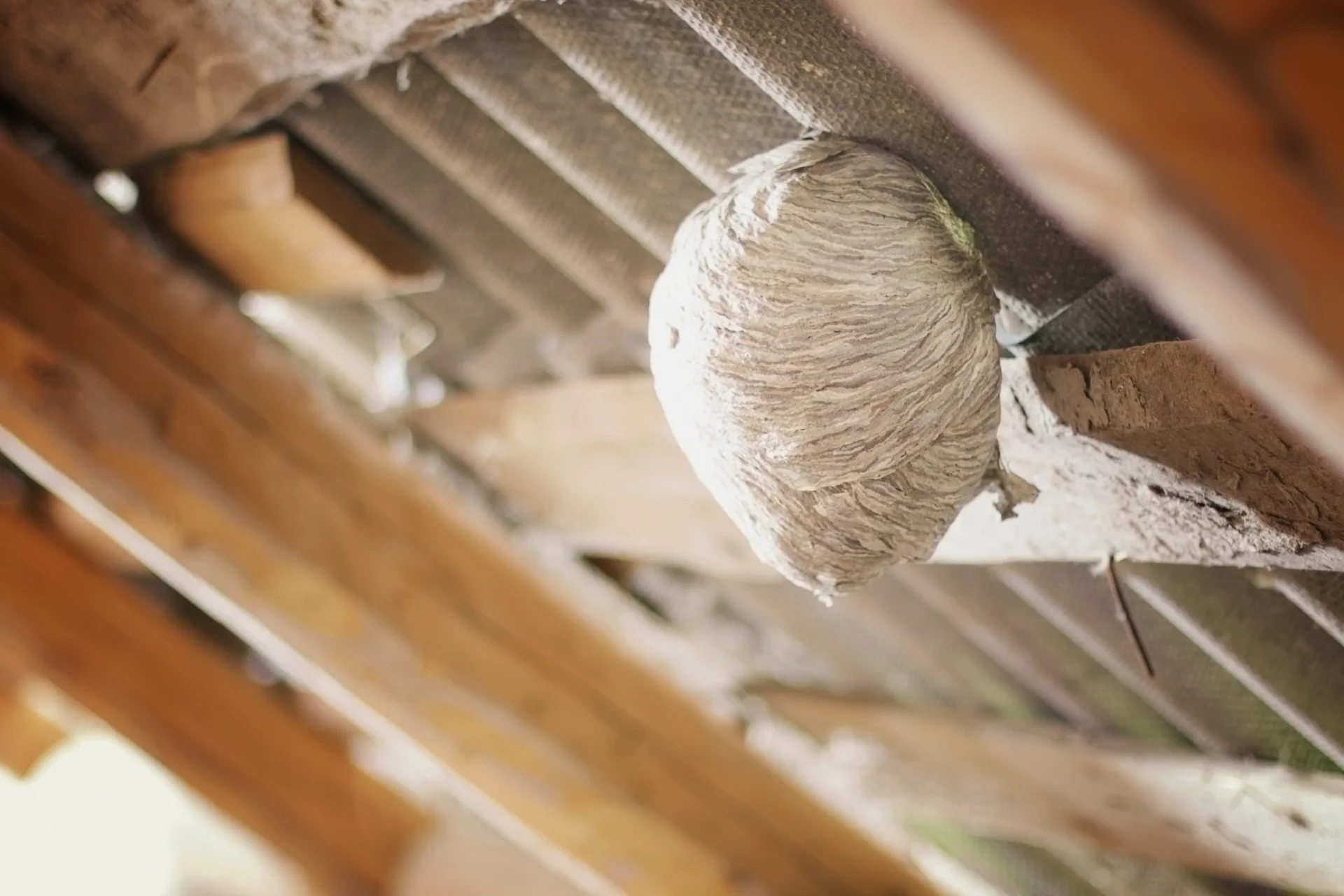
Since 2009, Bugsway has been Toronto's trusted specialist for stinging insect control. Michael Thompson founded the company with a focus on doing the job right the first time — using professional-grade products, proper protective equipment, and proven techniques that deliver complete colony elimination, not just surface suppression. Our technicians are fully licensed under Ontario's Pesticides Act and complete annual continuing education on stinging insect biology and control methods. We invest in the best available PPE — sealed bee suits, professional veils, and layered gloves — because hornet removal is not a job for improvised protection. We treat every nest as high-risk until confirmed otherwise. Toronto's neighbourhoods present unique hornet challenges. In Rosedale and Forest Hill, decades-old oak and maple trees provide abundant nesting habitat for bald-faced hornets. In Scarborough and North York, older housing stock with less-maintained soffit and fascia provides European hornets with easy cavity access. Our technicians understand the local landscape and bring that contextual knowledge to every job. We are also transparent about what we find. If a nest is inaccessible without structural modification, we tell you clearly and propose options. If there are multiple nest sites on your property, we document all of them and provide a comprehensive plan rather than treating only what's immediately visible. And if our treatment doesn't resolve the problem within the guarantee period, we return at no charge — no questions asked. For commercial properties including restaurants, schools, and warehouses, we provide full service documentation for your health and safety records and work discreetly to minimize disruption to your operations.
Why Toronto Chooses Bugsway for Hornet Control | Bugsway Wasp Bee Removal

Ready to Reclaim Your Yard?

Don't let a hornet nest dictate how you use your outdoor space. Bugsway provides fast, safe, guaranteed hornet removal throughout Toronto and the GTA.

Frequently Asked Questions

Common questions about hornet control in Toronto

What types of hornets live in Toronto?
The two primary hornets in Toronto are the bald-faced hornet (Dolichovespula maculata) and the European hornet (Vespa crabro). Bald-faced hornets build large paper nests in trees, shrubs, and on buildings. European hornets are larger, typically nesting in tree cavities, wall voids, and attics. Both can be aggressive when disturbed and require professional removal.
Are hornets dangerous?
Yes. Hornets are among the most aggressive stinging insects. Unlike honey bees, hornets can sting multiple times without dying. Bald-faced hornets actively defend a perimeter around their nest and may attack unprovoked if you venture within a few metres. European hornets are generally less aggressive but still dangerous near the nest. For anyone with venom allergies, a hornet encounter can be life-threatening.
How do I identify a hornet nest?
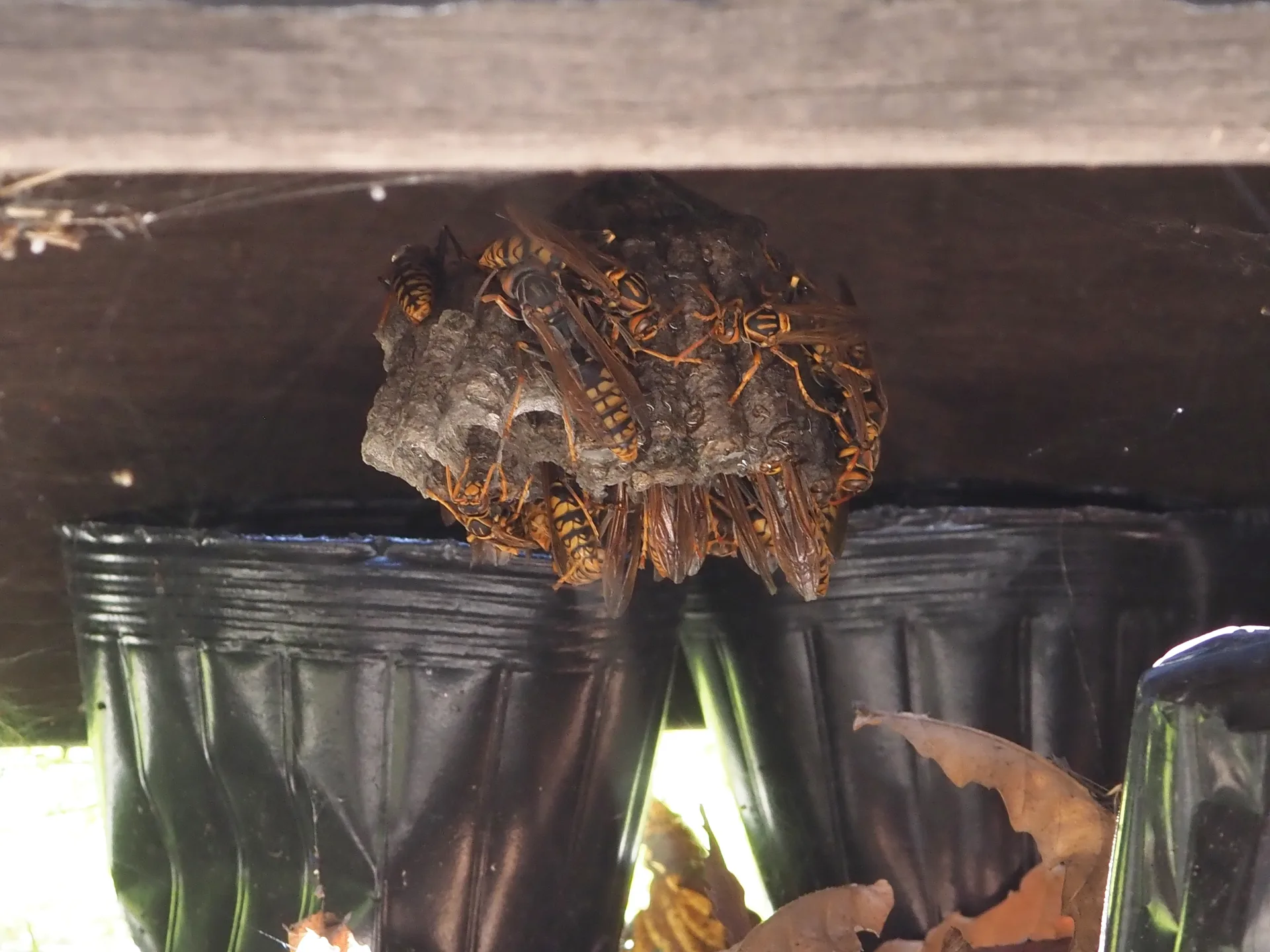
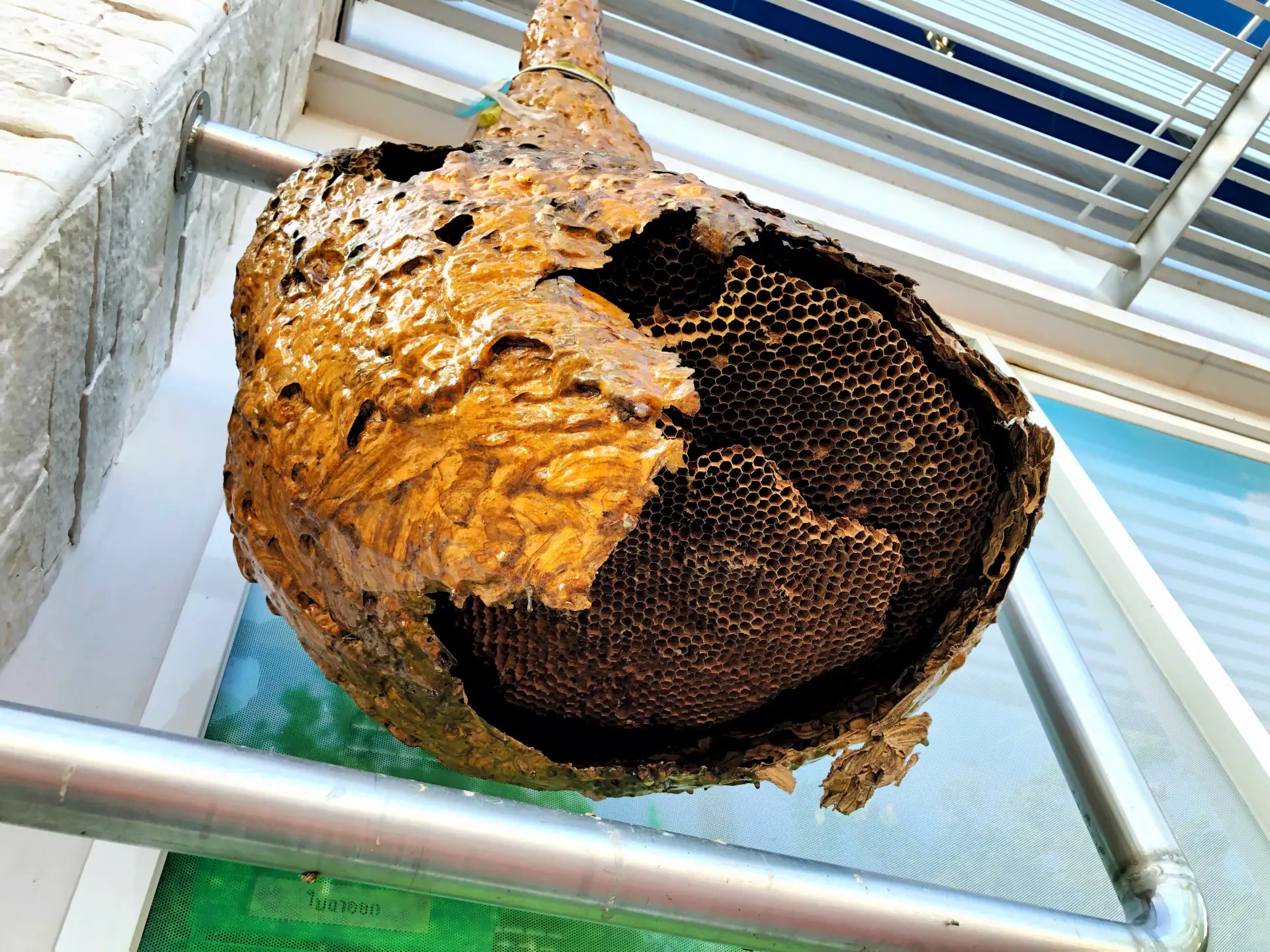
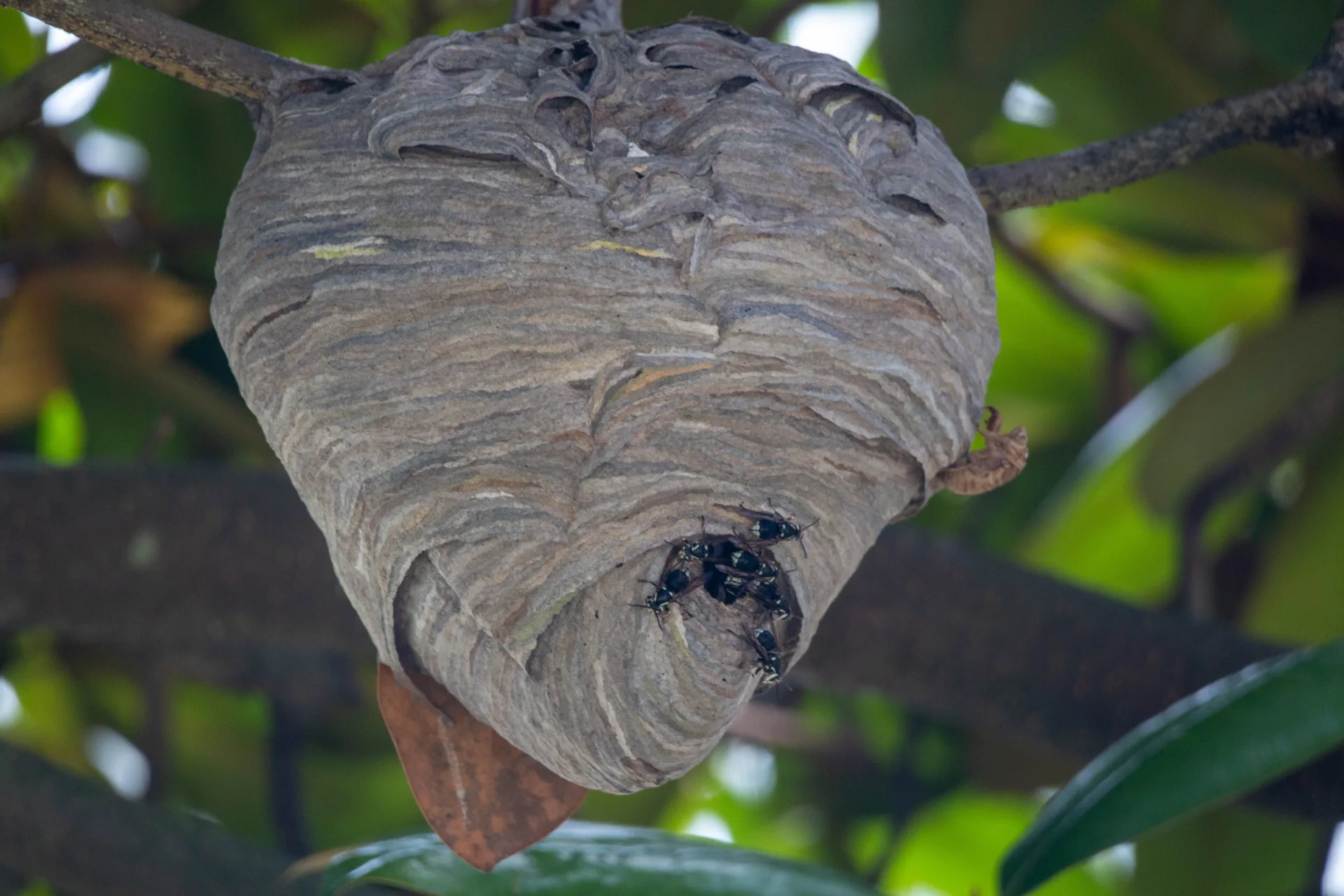
Bald-faced hornet nests are large, grey, paper-mâché-like structures, often football-shaped or round, suspended from branches or building eaves. They can exceed 60 cm in diameter by late summer. European hornet nests are typically hidden in cavities — wall voids, attic spaces, hollow trees — with a visible entrance hole. If you see large black-and-white or brown-and-yellow insects, call Bugsway for a professional assessment.
Can I remove a hornet nest myself?
We strongly advise against DIY hornet nest removal. A mature nest can contain 400–700 hornets, all capable of multiple stings. Aerosol wasp sprays sold at hardware stores often agitate the colony before killing it, triggering a mass defensive response. Professional technicians use PPE rated for stinging insect work and apply treatments that neutralize the colony rapidly and safely.
What is the process for professional hornet removal?
Bugsway technicians begin with a site assessment to identify the species, nest location, and access routes. We apply a fast-acting insecticide directly into the nest opening, neutralizing the colony. After a waiting period to confirm activity has ceased, the nest is physically removed. We then advise on exclusion measures to prevent re-nesting. The entire process is typically completed in under two hours.
When is the best time to remove a hornet nest?
Early season (May–June) removal is easiest — colonies are small and less aggressive. However, nests are often not noticed until late summer when they reach peak size. Professional removal is safe year-round. Night-time or early morning treatments are sometimes preferred as most hornets are inside the nest. In Toronto, hornet activity declines in October as colonies die off, but established nests on structures should still be physically removed.
Will hornets come back to the same location next year?
Hornet colonies do not reuse old nests. New queens overwinter and build entirely new nests in spring. However, they may select the same attractive site year after year. After nest removal, Bugsway advises on deterrents such as sealing entry points and trimming vegetation that provides attachment sites. Persistent re-nesting in the same location warrants a follow-up structural assessment.
Does Bugsway offer a guarantee on hornet control?
Yes. Our standard hornet treatment includes a 30-day service guarantee. If hornet activity resumes at the treated site within 30 days, we return at no additional charge. Our comprehensive plan extends this to a full season guarantee with up to two follow-up visits. We also provide recommendations for long-term structural exclusion to reduce the likelihood of re-colonization in future seasons.

Contact Bugsway Today

Available across Toronto and the GTA. Licensed, insured, and guaranteed.

Also see our wasp nest removal and bee relocation services.

Know Your Species

Hornets in Ontario: Species Guide and Risk Assessment

Ontario has two hornet species: the bald-faced hornet (Dolichovespula maculata), technically a large yellowjacket rather than a true hornet, and the European hornet (Vespa crabro), introduced from Europe in the 1800s. Bald-faced hornets are common throughout Toronto and the GTA, building the distinctive large grey paper nests (football to beach ball sized) visible in trees, shrubs, and on building overhangs from July through September. Their colonies reach 400-700 workers at peak size — significantly fewer than common yellow jackets but with larger, more aggressive individuals that can sting multiple times and pursue perceived threats aggressively for a significant distance.

European hornets are larger (25-35mm body length — visibly larger than any yellow jacket) and brownish-yellow rather than yellow-black. They are less common in Toronto but have been documented in suburban areas with mature trees. Unlike yellow jackets, European hornets are active at night — they are attracted to light and will sting if disturbed near lights after dark, which can surprise residents who don't expect stinging insects after sunset. Both species require professional treatment. Unlike honey bees (protected pollinators), hornets are not protected and extermination is appropriate when nests pose a risk to building occupants.
Hornets in Ontario: Species Guide and Risk Assessment | Bugsway Wasp Bee Removal
Technical Considerations

Bald-Faced Hornet Nest Removal: What Makes It Challenging

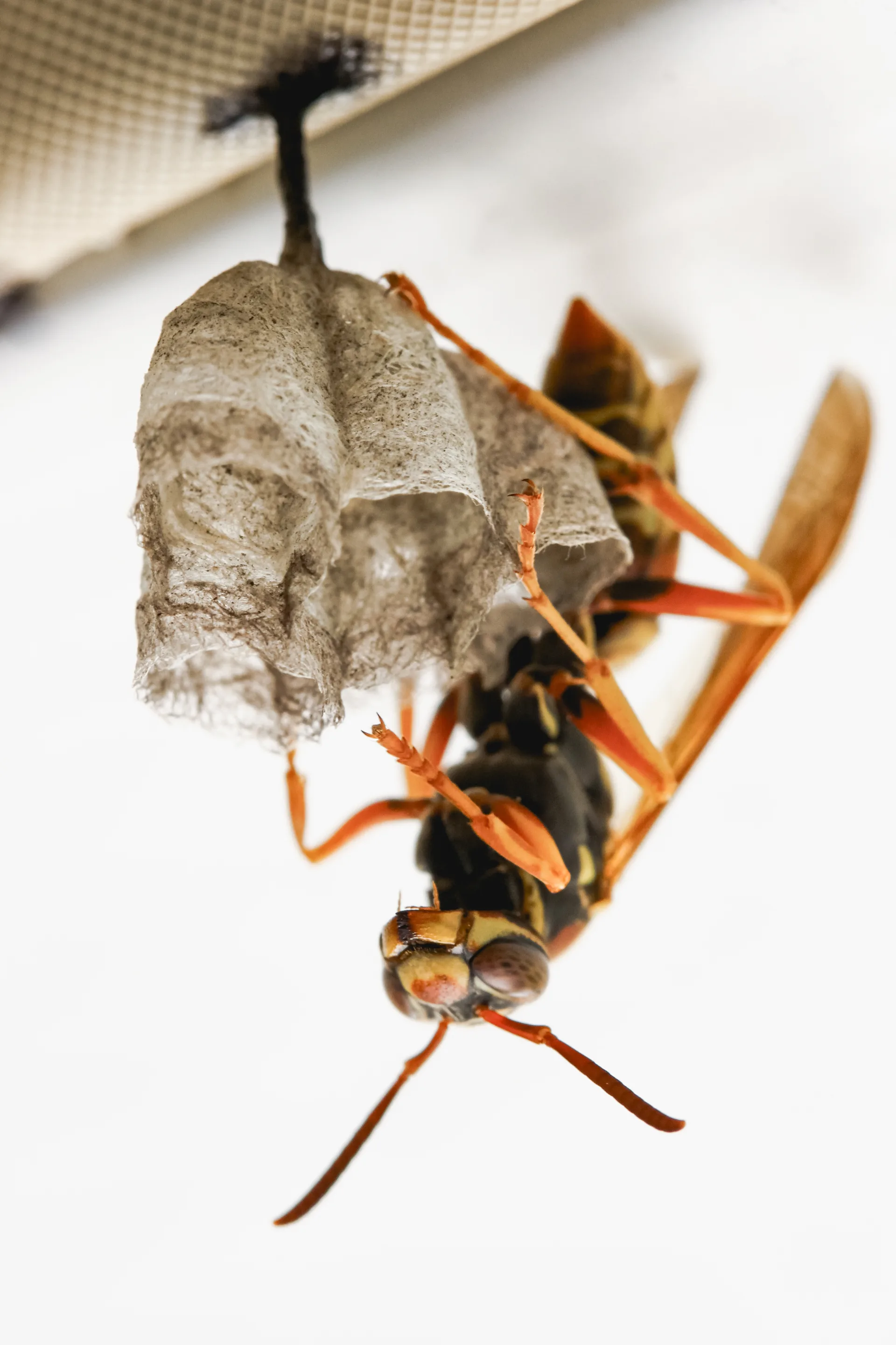
Bald-faced hornet nests in trees and shrubs present a challenging treatment scenario because they are typically in exposed positions without easy concealment of the technician's approach. Workers have excellent vision and react aggressively to movement detected near the nest. Treatment requires insecticide injection into the nest entrance (located at the bottom) using a pressurized applicator from maximum safe distance — followed by retreat and waiting for the knockdown to occur before approaching the nest for removal. For nests in accessible locations (under a deck, attached to a building overhang), the approach can be controlled more easily and is safer than treating a nest 8 metres up in a tree.

Nests are removed after worker kill is confirmed — typically 24-48 hours after treatment. The paper nest itself contains no living wasps after successful treatment, but should be removed to prevent other stinging insects (yellow jackets) from establishing in the same location the following year — though this is uncommon. Nests can be left in trees without removal if they are in a location where no people or pets will contact them and the visual presence is not a concern. Never remove a nest you believe to be inactive without confirming treatment — late-season nests may still have workers inside.
Bald-Faced Hornet Nest Removal: What Makes It Challenging | Bugsway Wasp Bee Removal
Species-Specific Notes

European Hornet Identification and Nest Location

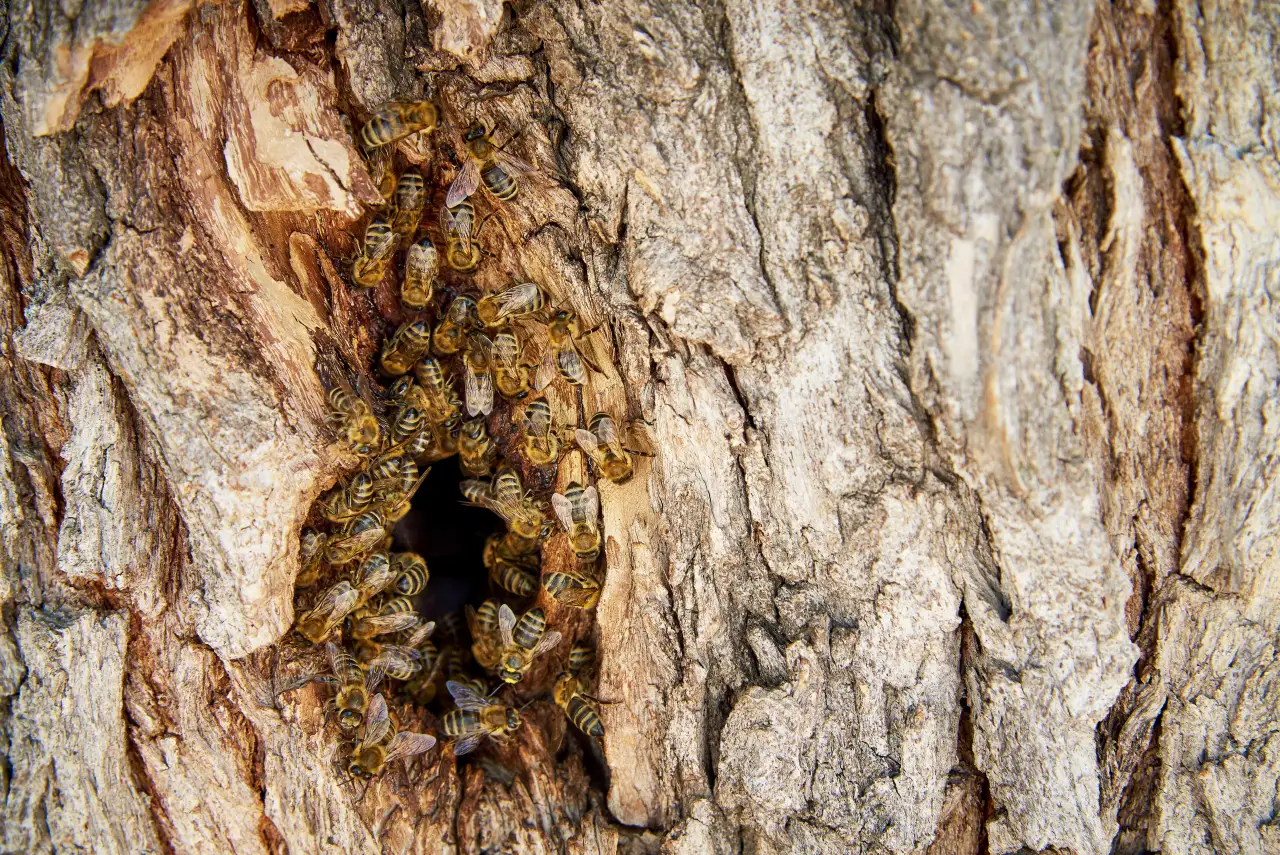
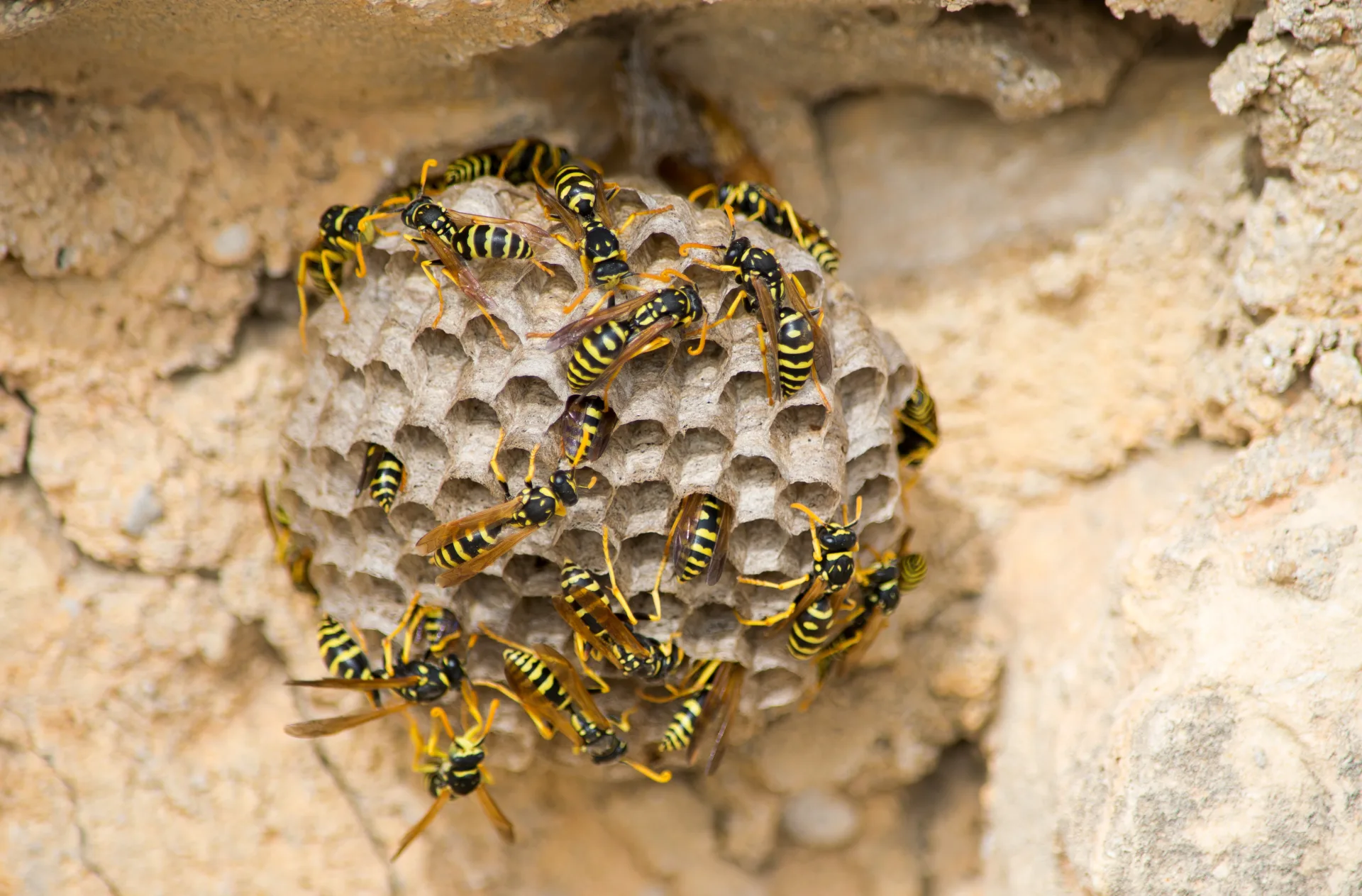
European hornets typically nest inside hollow trees, inside wall voids and attic spaces, and in other enclosed cavities — unlike bald-faced hornets which build exposed aerial nests. The nest entrance may be a hole in a tree trunk, a gap in a shed wall, or an opening in a brick chimney. Because the nest is concealed, the presence of European hornets is often first indicated by regular flight activity in and out of a single opening on a building or tree, particularly active in evening hours. Workers foraging for wood pulp (to construct the paper nest) may be observed stripping bark from young tree branches.

Treatment of concealed European hornet nests requires applying insecticide dust into the nest entrance and maintaining a safe distance — European hornets are significantly larger and more powerful stingers than most yellow jackets. The nest entrance should not be sealed during treatment, as sealing forces hornets to find an alternative exit which may be through the interior of the building. After worker kill is confirmed (48-72 hours), the entrance can be sealed with appropriate materials. If the nest is inside a wall void, accessing it for removal may require opening the wall — Bugsway advises on whether removal is recommended or whether leaving the treated nest in place is the better option.
European Hornet Identification and Nest Location | Bugsway Wasp Bee Removal

Frequently Asked Questions

Questions? Call 416-555-5555

How do I identify a bald-faced hornet vs. a European hornet?
Bald-faced hornets are black with white or ivory-coloured markings on the face and rear of the abdomen — they are distinctly black and white, not yellow-black. They are large (15-20mm body length) and build large exposed grey paper nests. European hornets are larger still (25-35mm), brownish-yellow with reddish-brown markings, and nest in concealed locations (tree cavities, wall voids, attic spaces). European hornets are notably active after dark — if you are seeing large stinging insects flying around outdoor lights after sunset, European hornets are likely. If you are unsure of the species, Bugsway technicians identify the species during the initial inspection before proceeding with treatment.
Do hornets die in winter?
Yes. Both bald-faced hornet and European hornet colonies die off in fall as temperatures drop. Only newly mated queens survive winter — they leave the colony in late summer, find a protected overwintering site (under bark, in soil crevices, in attic insulation), and emerge the following spring to found new colonies. The workers, males, and old queen all die. This means that old hornet nests from a previous year will not be reactivated — queens do not return to old nests. A hornet nest that was not treated last summer is safe to remove in winter or early spring without insecticide.
Is a hornet sting worse than a wasp sting?
European hornet stings are generally considered more painful than common yellow jacket stings due to the larger venom volume delivered by their larger stingers. Bald-faced hornet stings are comparably painful to large yellow jacket stings. Both species can sting multiple times (unlike honey bees, which lose their stinger). The primary medical concern with all stinging insect encounters is anaphylaxis in sensitised individuals — the identity of the species matters less than the person's allergy history. Anyone with a known venom allergy should carry an epinephrine auto-injector and seek medical care after any sting from any species.
What should I do about a hornet nest in a tree on the property line?
A hornet nest in a tree on a property line affects both properties and requires cooperation between neighbours for safe treatment. Either neighbour can call Bugsway to arrange treatment — we assess the nest location, determine the safest approach, and treat the nest. Legally, either property owner can contract pest control services that address a safety hazard on or adjacent to their property. If your neighbour is unresponsive, Bugsway can advise on the safest approach from your side of the property line. The key factor is distance from foot traffic and occupied areas — nests high in trees far from walkways and play areas may pose minimal practical risk and can sometimes be left until the colony dies off naturally in fall.
Can a hornet nest in a tree be left alone?
A bald-faced hornet nest in a tree that is away from walkways, play areas, and frequently used outdoor spaces can often be left undisturbed through the season. The colony will die off naturally in October-November, and the empty nest can be removed safely in winter. The key risk factor is proximity to regular human activity — a nest 6 metres up in a tree at the back of the property poses minimal practical risk compared to a nest 2 metres from the back door or over a play area. Bugsway can assess the specific location and advise whether treatment is warranted based on the distance from occupied areas and the nest's trajectory (colonies grow through September).
How large do hornet nests get?
Bald-faced hornet nests grow from golf ball size in May to football size by July and can reach basketball size or larger by September — typically 30-60cm in length and 20-40cm in diameter for mature nests. The worker population at peak size (August-September) typically ranges from 400 to 700 workers. European hornet nests inside cavities are more variable in size but are constrained by the space available. A European hornet nest inside a wall void may be compact, while one inside a large hollow tree trunk may be substantially larger. Both species nests are significantly smaller than peak-summer yellow jacket ground nests, which can contain several thousand workers.
Are hornets protected insects in Ontario?
Neither bald-faced hornets nor European hornets are protected species in Ontario. Unlike honey bees (which are managed livestock with economic importance to agriculture and beekeeping), hornets have no special legal protection and can be exterminated when they pose a risk to human safety. There is no obligation to attempt relocation before extermination for hornet nests. Bugsway treats hornet nests using licensed, registered insecticides applied in accordance with all applicable Ontario Ministry of the Environment and Climate Change regulations and product label requirements.
Can pets be stung by hornets?
Yes. Dogs and cats can be stung by hornets — typically when they investigate a nest or snap at a foraging hornet. Multiple stings are possible if a pet disturbs a nest. Stings around the muzzle and face are particularly concerning because swelling can potentially affect breathing. Signs of a concerning sting reaction in pets include significant swelling, hives, vomiting, weakness, or collapse — contact your veterinarian immediately in these cases. Pets that are allowed to roam near a known hornet nest location should be kept away from the area until the nest has been treated. After Bugsway treatment, the treated area should remain off-limits to pets for 24 hours.