Termite Treatment Markham
From heritage Unionville homes with soil-contact wood to construction debris colonies under Cornell's new subdivisions, Bugsway provides comprehensive termite inspection, liquid treatment, and baiting programs across all of Markham.
On this page
Termite Risk Factors in Markham
Unionville and Markham Village Heritage Homes
Heritage properties in Old Unionville and Markham Village along Main Street Markham include homes built from the 1850s through the 1960s with wood construction practices that predate modern termite mitigation standards. Wood sill plates with minimal concrete separation, wood porch posts set into soil, and inadequate foundation drainage create the soil-contact conditions that eastern subterranean termites require. Many of these homes have never been inspected for termites, and damage can accumulate quietly over decades inside wall framing.
Cornell and Box Grove New Construction Debris
The rapid development of Cornell Centre and the northeast Markham corridor has left buried construction debris throughout the area. Lumber offcuts, form boards, wood pallets, and tree roots buried during grading serve as the initial food source for termite colonies that established during construction. These colonies remain undetected for years until the debris is depleted and the termites extend their foraging into the structural wood of adjacent homes. Discovery typically occurs 5–12 years after construction in these areas.
Moisture-Prone Basements in Thornhill
The Thornhill portion of Markham includes homes built in the 1970s–1990s with concrete block foundations that are susceptible to moisture infiltration. Wet basement conditions — particularly near older sump systems and homes adjacent to stormwater retention areas — provide the moisture gradient that subterranean termites follow upward from soil to wood. Wood framing in these basements that has sustained periodic moisture exposure is especially vulnerable to termite attack once a colony is present in the surrounding soil.
Landscape Wood Features Across Markham
Landscape timbers, wood mulch beds, decorative wood edging, and organic garden features are common across Markham's residential properties from Greensborough to Cathedraltown. These landscape features in direct soil contact near the foundation provide bridging habitat between soil termite colonies and the structure. Termites can travel from a landscape wood source to structural framing in weeks. We identify and document landscape risk factors as part of every termite inspection and recommend modifications where the risk is significant.
Termite Treatment Options in Markham
Liquid Soil Treatment
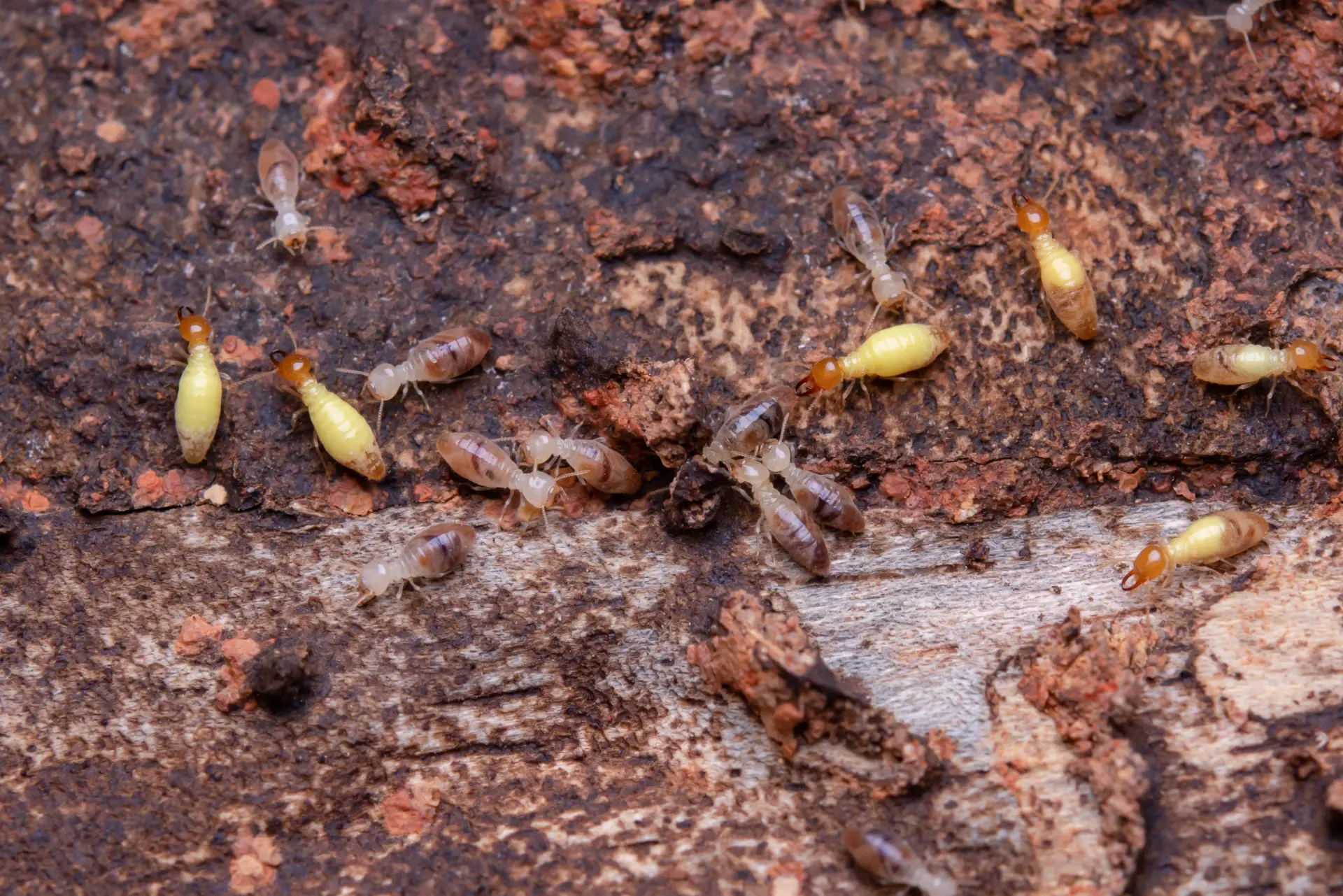
We trench the soil around the foundation to 15–30 cm depth and inject a non-repellent liquid termiticide at high volume. Non-repellent products are not detected by termites — they continue to travel through the treated zone, picking up the product on their bodies and spreading it throughout the colony via grooming. Colony elimination typically occurs within 90 days. Liquid treatment provides 5–10 years of residual protection and is our recommended approach for Cornell and Box Grove homes where debris colonies pose an active threat.
- 5–10 year residual protection
- Colony eliminated in 90 days
- Single-day treatment
Baiting System
We install in-ground bait stations around the foundation perimeter every 3 metres. Stations contain cellulose monitoring material that termites discover during normal foraging. When termite activity is confirmed, the cellulose is replaced with an insect growth regulator bait that termites share with the colony. Colony elimination takes 90–180 days. Baiting is preferred for Unionville and Markham Village heritage homes where trenching near heritage foundations or landscaping is not appropriate, and for properties where liquid injection near water features would be a concern.
- No trenching near heritage features
- Minimal chemical use
- Ongoing monitoring included
What's Included in Termite Treatment
Full Termite Inspection
Inspection of all accessible structural wood, foundation walls, crawlspaces, sill plates, and landscape features.
Mud Tube Mapping
Documentation of all mud tube locations, active galleries, and entry points found during inspection.
Liquid Soil Treatment
Foundation trenching and non-repellent termiticide injection providing 5–10 year residual protection.
Bait Station Installation
In-ground bait stations placed every 3 metres around the foundation perimeter with quarterly monitoring.
Written Inspection Report
Full documentation of findings, treatment applied, and recommendations for pre-purchase or insurance purposes.
1-Year Treatment Warranty
If termites return to a treated structure within 12 months, we re-treat at no additional charge.
Markham Neighbourhoods We Serve
Unionville
Heritage homes, soil-contact wood risk
Markham Village
19th-century homes, basement sill plates
Cornell
Construction debris colonies in soil
Box Grove
New subdivision, buried wood sources
Thornhill (Markham)
1970s–90s homes, moisture-prone basements
Cathedraltown
Landscape wood features, executive homes
Angus Glen
Large lots, wood mulch and timber risk
Milliken Mills
Mixed housing, pre-purchase inspections
Greensborough
Suburban homes, deck and landscape wood
What Markham Homeowners Say
"We found mud tubes in our basement when renovating. Bugsway did a full inspection, found the entry point at a wood sill plate, and installed a baiting system that was appropriate for our heritage home. The colony was eliminated within four months and we have had no activity since."
Helen F.
Unionville, Markham
"Our seven-year-old home had termites — we could not believe it. Bugsway explained the construction debris source under new subdivisions and treated the foundation with liquid treatment. Annual inspection confirmed no new activity the following year."
Mark D.
Cornell, Markham
"Bugsway did a pre-purchase termite inspection for us before we bought our Main Street Markham home. They found evidence of past activity and treated before we closed. The written report was exactly what we needed for our lender and insurance. Professional and thorough."
Jennifer K.
Markham Village, Markham
We Serve All of Markham
Termite Prevention in Markham Properties
Markham homeowners in Unionville and Markham Village should be particularly vigilant given these communities' older housing stock with original wood sill plates and joists that have had decades to develop moisture damage — ideal termite conditions. New subdivision development in Cornell, Greensborough, and Wismer has buried construction debris including scrap lumber during site preparation, creating termite-friendly cellulose food sources in newly built homes that can sustain colonies for years before visible damage is noticed.
Homeowners should eliminate wood mulch touching the foundation, ensure downspout drainage directs water away from the house, and inspect crawlspace joists annually for mud tubes or soft wood. York Region's rural-urban fringe in Markham creates continuous eastern subterranean termite pressure from surrounding natural areas, particularly for homes in Cathedraltown, Angus Glen, and Berczy Village that back onto naturalized buffers or Rouge National Urban Park. Learn more on our termite treatment service page.