Wasp & Bee Removal Markham
From yellow jacket ground nests in Cornell's new subdivisions to bald-faced hornet nests in Unionville's mature oak canopy, Bugsway safely removes stinging insects from Markham properties all season long.
On this page
Why Wasp and Bee Removal Is Needed Throughout Markham
Cornell and Box Grove Ground Nests
The newly graded soils of Cornell Centre, Box Grove, and Greensborough are ideal for yellow jacket queens establishing ground nests in spring. New lawn areas with loose, sandy subsoil and minimal root competition allow colonies to excavate freely. Homeowners often discover these nests by accidentally disturbing them while mowing, gardening, or allowing children to play in the yard. A single ground nest disturbed in August can deploy hundreds of aggressive yellow jackets within seconds.
Unionville Canopy Hornet Nests
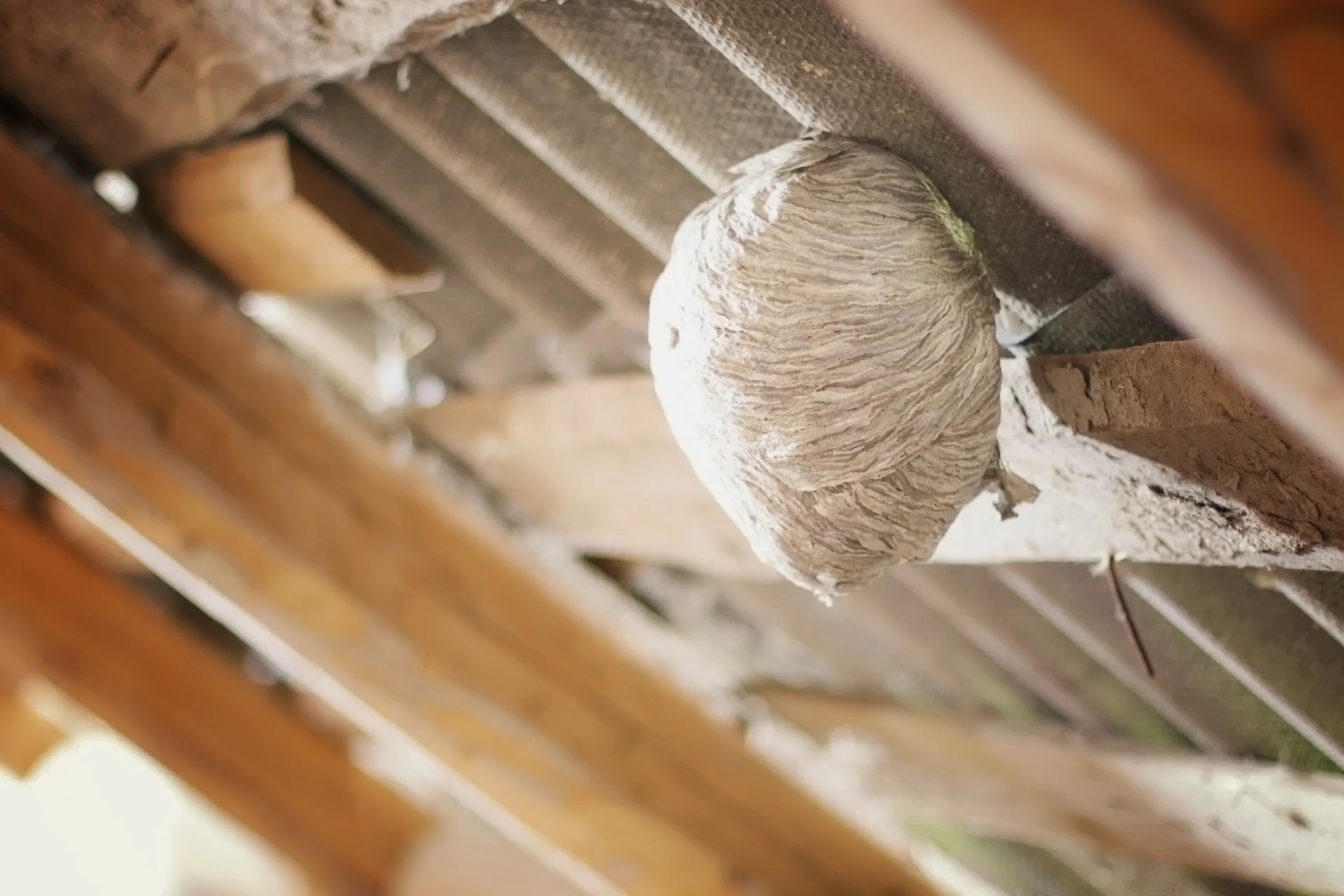
Old Unionville's heritage streetscape is lined with large deciduous trees that bald-faced hornets favour for aerial nest attachment. These nests grow throughout summer and are camouflaged by leaf cover until autumn. By September a nest the size of a regulation basketball contains 400–700 workers at peak aggression — defending a perimeter of 3 metres or more around the nest. Nest proximity to children's play areas, outdoor dining spaces, and heritage building eaves makes summer removal essential.
Eave and Soffit Nests Across Markham
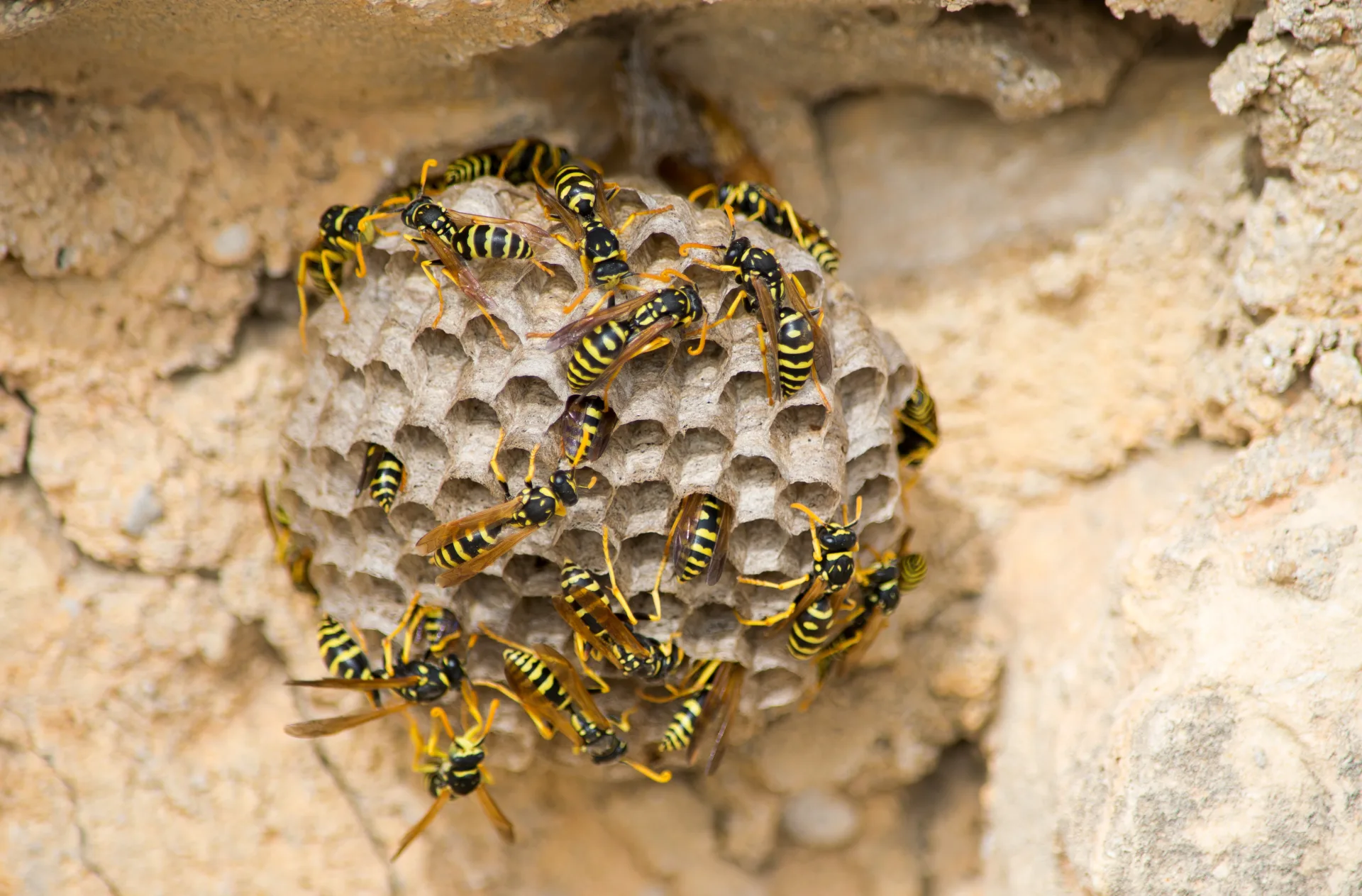
Paper wasps and yellow jackets build eave and soffit nests on homes throughout Markham from Thornhill to Markham Village. These open umbrella-shaped or closed paper nests are found under deck railings, garage door frames, and patio furniture. Small in spring, they reach 30–50 workers by mid-summer and become increasingly defensive. Homeowners who delay treatment through summer find nests much harder to remove safely in August and September when colonies are at maximum size.
Honey Bee Swarms Near Cathedraltown and Angus Glen
The larger lot sizes in Cathedraltown, Angus Glen, and the rural-residential fringe of northeast Markham provide foraging habitat for honey bee colonies. Swarms appear on tree branches, fence posts, and exterior structures in May and June when established hive populations split. While swarms are temporary and usually not aggressive, they alarm homeowners and should be handled by a beekeeper rather than a pest control technician. We coordinate with York Region beekeepers for swarm collection and removal.
How We Remove Wasps and Bees Safely in Markham
Species Identification
We confirm the species before treatment because the approach differs by nest type and insect species. Yellow jacket ground nests require direct dust injection into the burrow opening. Aerial hornet nests require application of residual aerosol into the nest opening after dark or at dawn. Paper wasp eave nests can be treated with contact aerosol and removed once the colony is eliminated. Honey bee swarms require beekeeper coordination rather than extermination. Correct identification prevents using the wrong method and creating a more aggressive response from the colony.
Early Morning Treatment Timing
We schedule treatments at dawn when most colony workers are inside the nest and ambient temperatures slow insect reaction time. This minimizes the number of wasps in the air during treatment and reduces the risk of stinging. For ground nests in Cornell yards, we apply registered insecticide dust directly into the nest entrance and seal it. The dust is carried deeper into the nest by returning workers, achieving full colony elimination within 24–48 hours. We return the following day to confirm the nest is inactive before sealing or removing it.
Post-Treatment and Prevention
After colony elimination we remove accessible nests and seal entry points in eaves, soffits, and wall voids to prevent reuse by new queens the following spring. For interior wall void nests we seal the entry point after treatment. We provide written notes identifying any structural gaps or attractants — open compost bins, exposed pet food, fruit trees — that should be addressed to reduce future nesting pressure on the property.
What's Included in Wasp and Bee Removal
Species Identification
Visual confirmation of nest type and species before any treatment is applied.
Nest Treatment
Registered insecticide applied directly to nest using dust, aerosol, or foam depending on nest location and type.
Nest Removal
Physical removal of inactive nests from accessible locations within 24–48 hours of treatment.
Entry Point Sealing
Gaps and openings in eaves, soffits, and wall cladding sealed to prevent reuse by next year's queens.
Honey Bee Coordination
For honey bee swarms and established hives, we coordinate with York Region beekeepers for live relocation.
Prevention Report
Written notes on attractants and structural gaps that should be addressed to reduce future nesting.
Markham Neighbourhoods We Serve
Unionville
Canopy hornet nests in mature oaks
Cornell
Ground yellow jackets in new soils
Box Grove
Agricultural fringe, multiple species
Markham Village
Eave and soffit nests, older homes
Cathedraltown
Honey bee swarm zone, large lots
Angus Glen
Estate homes, aerial nests
Milliken Mills
Urban density, eave paper wasps
Greensborough
New development, ground nests
Thornhill (Markham)
Established suburb, mixed nest types
What Markham Homeowners Say
"Yellow jackets were nesting in the front lawn and stung my son twice. Bugsway came out the same morning I called, treated the ground nest before 7am, and the nest was completely inactive by the next day. Extremely efficient service."
Robert M.
Cornell, Markham
"A bald-faced hornet nest had grown to enormous size in our oak tree and was hanging over the patio. Bugsway treated it at dawn and removed it the following morning. We had no idea how large it was until it came down — over 700 workers. Very glad we called professionals."
Catherine Y.
Unionville, Markham
"A honey bee swarm settled on our fence post in June. Bugsway correctly identified it as a honey bee swarm and connected us with a local beekeeper who collected the bees at no cost. Excellent advice — they could have just exterminated them but chose the right approach."
Tom A.
Cathedraltown, Markham
We Serve All of Markham
Wasp Nesting in Markham's Suburban Communities
Markham's established neighbourhoods like Unionville and Markham Village have abundant wasp nesting sites in mature tree canopies and aging wooden structures — fascia boards, deck frames, and garden sheds that have softened with age. Yellow jackets frequently nest under the patios and in the lawn voids of newer Angus Glen and Cornell homes, where fresh topsoil and irrigation create ideal subterranean nest conditions that can go unnoticed until summer activity peaks in August.
Bald-faced hornets build their distinctive grey paper nests in the oak and maple canopy of the Markham Village historic area and Rouge National Urban Park buffer zones each summer, sometimes reaching volleyball size by September. Homeowners in Berczy Village, Cathedraltown, and Wismer should inspect eaves, soffits, and wooden fences in April before wasp queens establish new colonies — early detection and nest removal while the colony is small is far simpler and safer than treating a mature nest. Learn more on our wasp and bee removal service page.