Mosquito Control Brampton
Brampton's rapid growth brings construction depressions, stormwater ponds, and creek corridors that fuel heavy mosquito populations. Our seasonal barrier spray and larvicide programs protect your yard from Etobicoke Creek through to Heart Lake.
On this page
Why Brampton Homeowners Face Heavy Mosquito Seasons
Construction Zone Breeding
Springdale, Sandringham, and Mount Pleasant are among the most active residential construction areas in Ontario. Graded lots, compacted soil depressions, and excavation trenches collect rainwater to create hundreds of temporary breeding pools every spring. These pools warm quickly in exposed sun and produce massive mosquito hatches within days of a rainfall event. Homeowners in adjacent finished subdivisions experience the worst of this surge without any ability to eliminate the source.
Etobicoke Creek Corridor
Etobicoke Creek enters Brampton from the northwest and flows through the western half of the city before continuing south. Its floodplain supports dense riparian vegetation and backwater pooling after every significant rainfall. Culex and Aedes mosquitoes breed along the creek margins and disperse up to 1.5 km into surrounding residential areas. Homes in Brampton West, Fletcher's Creek, and Mount Pleasant neighbourhoods are particularly affected throughout June and July.
Heart Lake Conservation Area
Heart Lake Conservation Area in northern Brampton preserves wetlands, a natural lake, and forest habitat that produces sustained mosquito populations throughout the warm season. Homes in the Snelgrove and Heart Lake neighbourhoods face pressure from this natural reservoir from late April through September. Unlike construction sites that eventually get built out, Heart Lake remains a permanent landscape feature requiring ongoing barrier protection at the property edge.
Stormwater Pond Networks
Bramalea, Springdale, and the newer communities of Northwest Brampton are served by engineered stormwater management ponds that retain runoff from impervious surfaces. When pond water levels fluctuate, they expose moist vegetation and shoreline debris that serves as ideal oviposition habitat. Peel Region maintains these ponds but cannot control the adjacent residential vegetation and standing water features that amplify mosquito pressure on surrounding homes.
Brampton Mosquito Control Program
Property Inspection and Habitat Assessment
Every program starts with a thorough inspection of your property. We identify standing water in gutters, downspout splash pads, birdbaths, plant saucers, and low-lying areas. We note vegetation density, fence lines, and shaded areas where adult mosquitoes rest during the day. Properties near the creek or stormwater ponds receive a detailed assessment of the adjacent habitat pressure so we can calibrate treatment intensity accordingly.
Barrier Spray Treatment
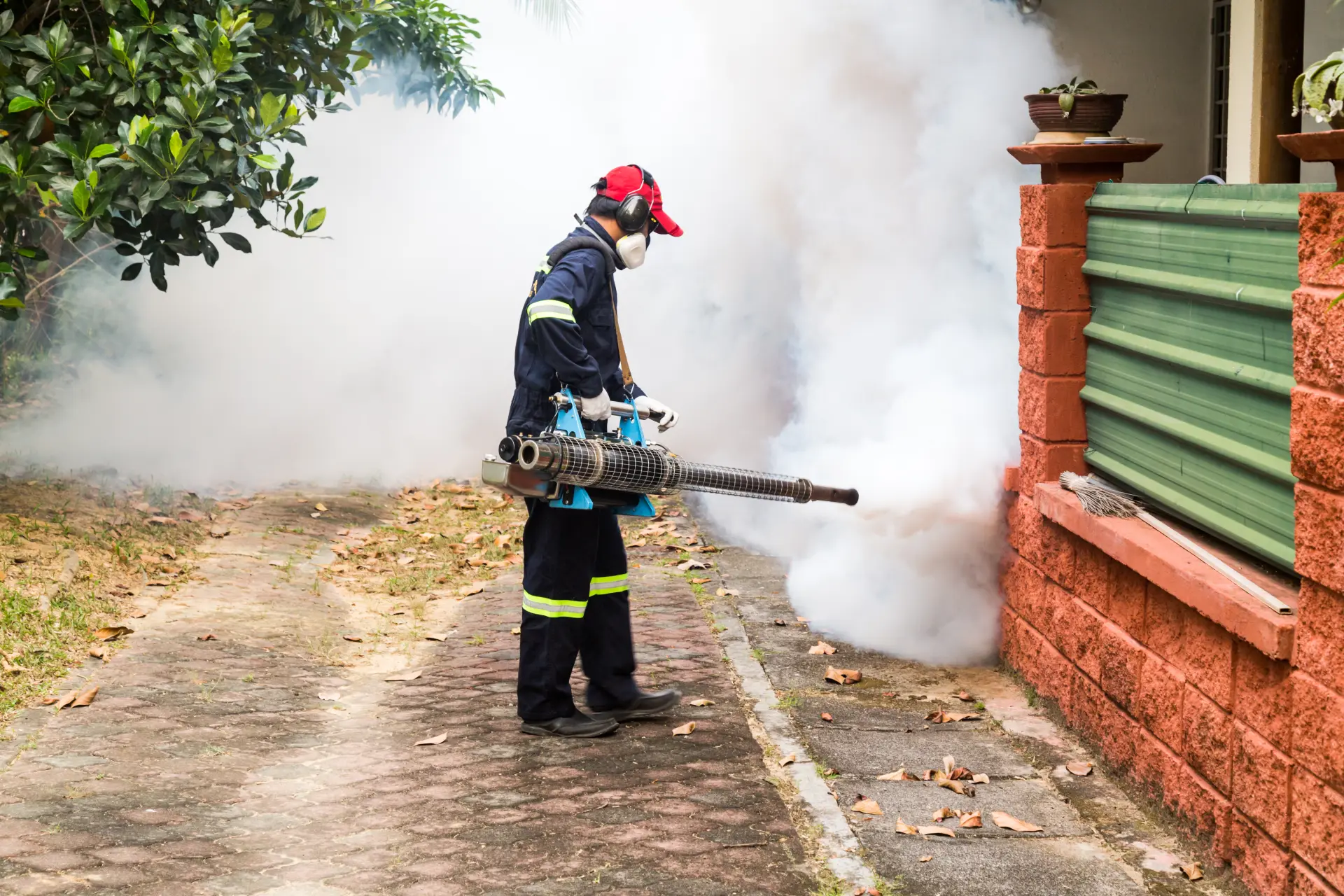
We apply a microencapsulated residual product to grass, ornamental shrubs, fence lines, and the underside of deck structures — the zones where adult mosquitoes rest when not feeding. The formulation adheres to leaf surfaces and provides 3–4 weeks of knockdown activity against landing mosquitoes. Treatments are timed to dry before rain and are applied in the cooler morning hours when mosquitoes are most active at lower vegetation levels. Properties in Springdale and near Etobicoke Creek corridors typically require the full 4–6 treatment seasonal package.
Larvicide Treatment
For standing water features that cannot be emptied — ornamental ponds, rain barrels, low drainage swales — we apply Bacillus thuringiensis israelensis (Bti) dunks or granules. Bti is a naturally occurring soil bacterium that kills mosquito larvae without harming fish, wildlife, or pets. This interrupts the breeding cycle at the source rather than waiting to treat hatched adults. In Bramalea where older drainage infrastructure allows water to pool in low yards, larvicide application is often the single highest-impact step we can take.
Seasonal Follow-Up Schedule
Brampton's breeding conditions mean mosquito populations can recover fully within 3 weeks of a rain event. Our seasonal program spaces treatments every 21–28 days from May through September, with flexibility to add a treatment after extended wet periods. We track Peel Region Public Health West Nile virus monitoring updates and flag clients in affected areas for priority scheduling. At the end of the season we provide written notes on habitat reduction steps to reduce the following year's starting population.
What's Included in Every Mosquito Control Visit
Pre-Treatment Inspection
Technician walks the full property to identify resting sites, breeding water, and access paths before applying any product.
Barrier Spray Application
Microencapsulated residual product applied to low vegetation, shrubs, fence lines, and deck undersides at the correct rate for your property size.
Standing Water Larvicide
Bti dunks or granules placed in ornamental ponds, rain barrels, downspout extensions, and drainage swales where water cannot be eliminated.
Habitat Reduction Notes
Written list of standing water sources and vegetation changes you can make to reduce pressure between treatments.
Service Report
Documentation of products used, rates applied, areas treated, and any conditions noted — useful for strata or HOA records.
Seasonal Scheduling
Follow-up treatments booked automatically at 21–28 day intervals through September so you don't have to call each time.
Brampton Neighbourhoods We Serve
Springdale
Construction-adjacent breeding pools
Sandringham
Active development zone pressure
Mount Pleasant
Creek corridor and new subdivision
Bramalea
Stormwater infrastructure and older lots
Heart Lake
Conservation Area boundary pressure
Snelgrove
Natural wetland and forest edge
Brampton West
Etobicoke Creek floodplain
Fletcher's Creek
Creek and ravine corridor
Downtown Brampton
Urban heat and ornamental water features
What Brampton Homeowners Say
"The stormwater pond behind our subdivision was making our backyard unusable by 7pm every night. Bugsway did a barrier spray and larvicide combo at the start of the season and we were able to actually use our deck again. We did four treatments through the summer and each one made a noticeable difference."
Navneet G.
Springdale, Brampton
"Living near Heart Lake Conservation Area is beautiful but the mosquitoes in June and July were relentless. Bugsway explained that the wetlands are a permanent source we cannot eliminate, so they set up a seasonal program targeting our yard perimeter. The results were immediate after the first treatment and held well between visits."
Karen A.
Heart Lake, Brampton
"We had our daughter's outdoor birthday party in July and were worried about mosquitoes. Bugsway came out two days before the event and treated the whole yard. Not a single complaint from our guests. We have since signed up for the full seasonal program."
Shirley M.
Bramalea, Brampton
We Serve All of Brampton
Other Pest Control Services in Brampton
Mosquito Control Across the GTA
Bugsway provides mosquito control throughout all Brampton communities — from Bramalea and Brampton East to Heart Lake, Sandalwood, Springdale, and the new Mount Pleasant subdivisions. Same-day service is available. All products are Health Canada-registered and applied by Ontario Pesticides Act licensed technicians. Serving Brampton since 2009.