Wasp & Bee Removal Vaughan
Yellow jacket ground nests in Maple and Vellore Village, hornet nests in Kleinburg heritage trees, and eave nests across Woodbridge and Concord — Bugsway removes stinging insects safely across all of Vaughan.
On this page
Wasp and Bee Activity Across Vaughan
Maple and Vellore Village Ground Yellow Jackets
The sandy, well-draining soils underlying Maple and Vellore Village's large residential lots are prime yellow jacket nesting habitat. Queens establish colonies in spring in abandoned rodent burrows, lawn edges, and loose soil near landscape beds. By August the colony contains thousands of workers defending a perimeter of 3–5 metres around the nest opening — which is often invisible at ground level. Homeowners most commonly discover nests by mowing over them or approaching them while gardening.
Kleinburg and Woodbridge Aerial Hornet Nests
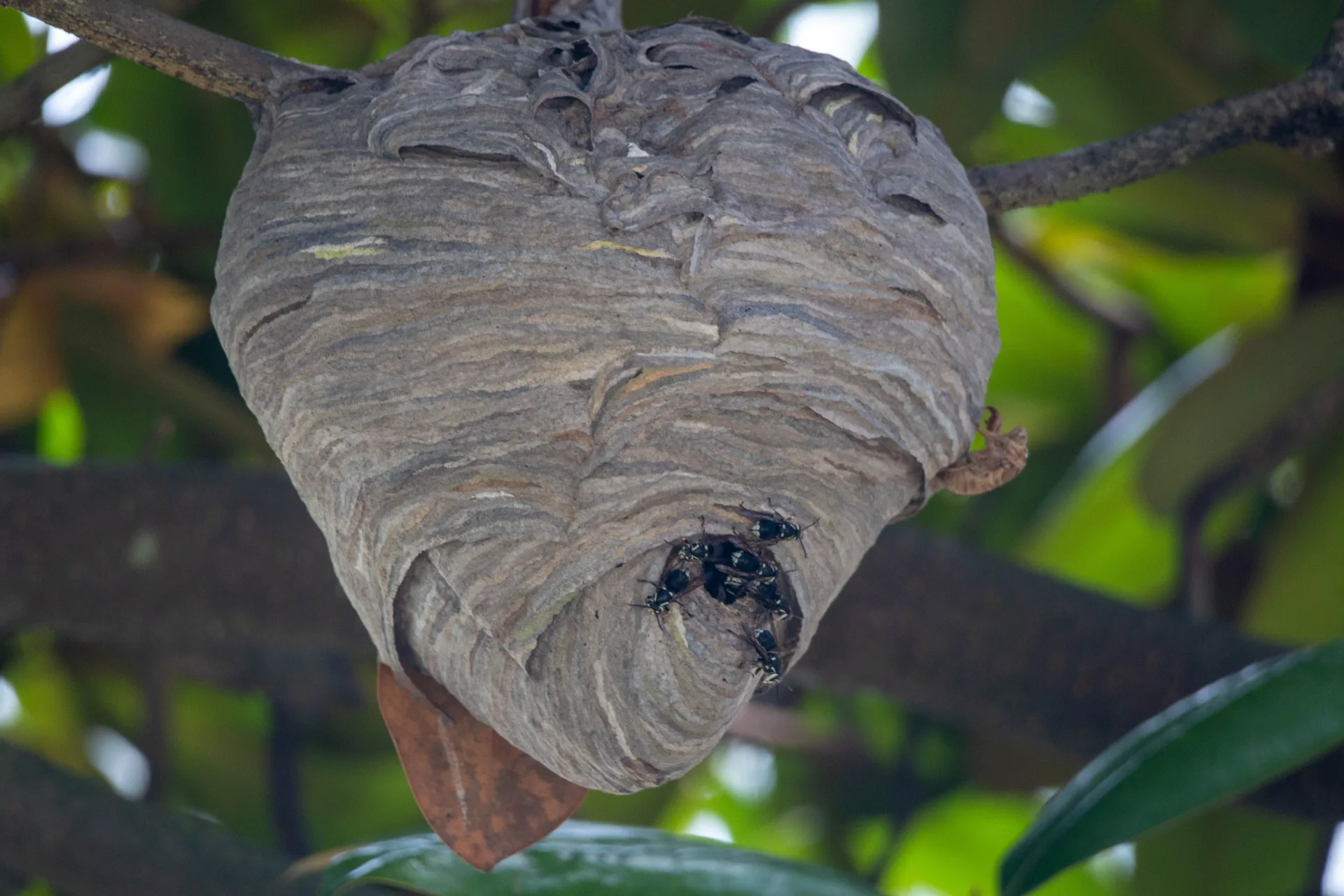
Kleinburg Village and the tree-lined streets of Woodbridge adjacent to the Humber River ravine support mature oak, maple, and elm canopies where bald-faced hornets build large paper nests in branch forks. These nests are hidden by summer foliage until autumn when they become clearly visible — often having grown to over 60 cm in diameter by September. Discovering a hornet nest in autumn does not make it less dangerous: late-season colonies are at peak population and heightened defensive aggression.
Eave and Soffit Nests Across Vaughan
Paper wasps build open umbrella-shaped eave nests on soffits, window frames, and garage door surrounds throughout Vaughan's residential areas. Concord, Thornhill, and established Woodbridge homes see these nests form every spring from April onward. Small in May, they grow to 30–50 workers by July and 80–100 by September. Treatment in spring when nests are small is far easier and safer than waiting until mid-summer. Early treatment also prevents the colony from establishing enough workers to defend aggressively.
Honey Bee Swarms Near Kleinburg and Patterson
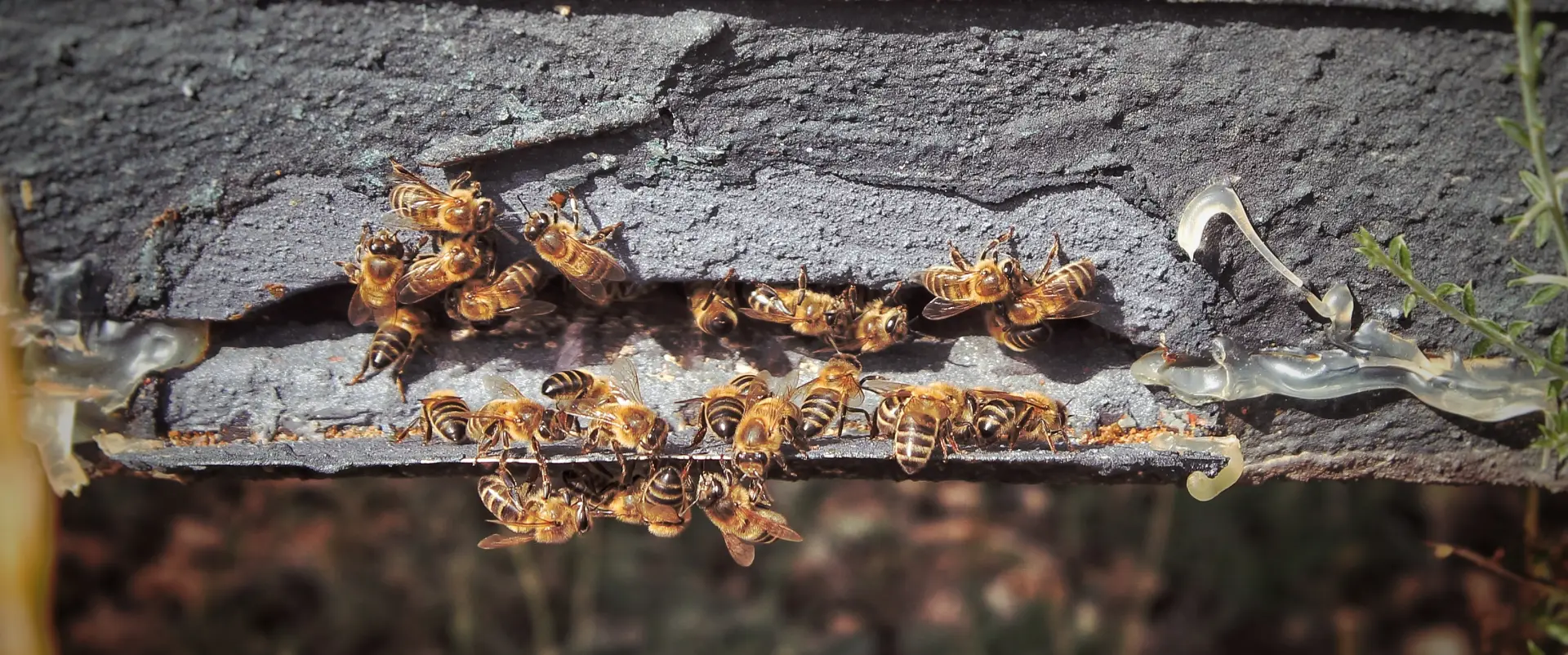
The larger estate properties and rural-fringe communities of Kleinburg, Patterson, and the northern edge of Vaughan near King-Vaughan Road provide foraging habitat for honey bee colonies from nearby apiaries and wild hive sites. Swarms appear on tree branches, garden structures, and exterior walls in May and June as established colonies divide. While swarms are temporary and typically non-aggressive, they can alarm homeowners. We coordinate with York Region beekeepers for live collection and relocation at no cost to the homeowner.
How We Remove Wasps and Bees in Vaughan
Species Identification Before Treatment
We confirm the species before recommending any treatment because approach differs completely by insect type. Yellow jacket ground nests require dust injection into the burrow entrance. Aerial hornet nests require residual aerosol application into the nest opening. Eave paper wasp nests can be treated with contact aerosol and physically removed. Honey bee swarms require beekeeper coordination rather than extermination. A brief description or photo over the phone is often sufficient for species confirmation before we arrive.
Early Morning Treatment Timing
We treat at dawn when most workers are inside the nest and cooler temperatures reduce insect flight activity. For Maple and Vellore Village ground nests, we apply registered insecticide dust directly into the nest entrance in the pre-dawn hours, creating rapid knockdown of the colony. For Kleinburg aerial hornet nests at height, dawn treatment allows us to apply product with extension equipment from ground level before flight activity increases. We confirm colony elimination 24–48 hours after treatment before performing any nest removal.
Post-Treatment Sealing and Prevention
After colony elimination we remove accessible nests and seal entry points in eaves, soffits, and wall voids to prevent reuse by new queens the following spring. For interior wall void nests in Woodbridge or Concord homes we seal the exterior entry point after treatment. We provide written notes on attractants and structural gaps — open compost, fruit trees, damaged fascia — that should be addressed to reduce future nesting on the property.
What's Included in Wasp and Bee Removal
Species Identification
Visual confirmation of nest type and insect species before any treatment is applied.
Nest Treatment
Registered insecticide applied by dust, aerosol, or foam depending on nest type and location.
Nest Removal
Physical removal of inactive nests from accessible locations 24–48 hours after treatment.
Entry Point Sealing
Eave, soffit, and wall void gaps sealed to prevent nest reuse by queens the following spring.
Honey Bee Coordination
For honey bee swarms, we coordinate with York Region beekeepers for live relocation.
Prevention Report
Written notes on attractants and structural conditions that should be corrected to deter future nesting.
Vaughan Neighbourhoods We Serve
Maple
Sandy soil, ground yellow jacket nests
Vellore Village
Large lots, ground nest discovery risk
Kleinburg
Heritage canopy, bald-faced hornet nests
Woodbridge
Ravine trees, aerial hornet and wasp nests
Concord
Established suburb, eave paper wasp nests
Thornhill (Vaughan)
Mixed housing, eave and soffit nests
Patterson
Estate properties, honey bee swarms
Vaughan Metropolitan Centre
High-rise eaves, balcony paper wasp nests
Sonoma Heights
Suburban homes, backyard ground nests
What Vaughan Homeowners Say
"Yellow jackets were nesting in the front lawn and stung two family members. Bugsway came out before 6am, treated the ground nest, and confirmed it was inactive the following morning. Same-day response and completely resolved. Excellent service."
Carla D.
Maple, Vaughan
"A massive bald-faced hornet nest in our heritage oak was making the side yard unusable. Bugsway treated it at dawn and removed it the next day. The nest was enormous — the technician said it was one of the largest he had seen that season. Very professional."
Andrew B.
Kleinburg, Vaughan
"Honey bee swarm on our garden fence post in June. Bugsway came out, confirmed it was honey bees not wasps, and connected us with a local beekeeper who collected them the same afternoon. Very glad they knew the right approach."
Nadia F.
Patterson, Vaughan
We Serve All of Vaughan
Wasp and Bee Nesting in Vaughan Communities